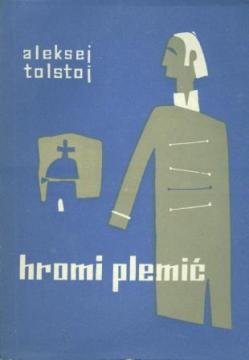
Hromi plemić

Hromi plemić

Aleksej K. Tolstoj

In the short story The Crippled Nobleman, the tragic fate of an unfortunate aristocrat becomes a parable about pride, pain, and transience. The author combines realism and romance into a deeply emotional story about human vulnerability and dignity.

The short story The Lame Nobleman by the Russian writer Alexei Konstantinovich Tolstoy (1817–1875) is a psychologically and morally layered work that explores human loneliness, sadness, and the need for love. Tolstoy, known for his historical novels, poetic ballads, and humorous stories, in this short story reaches a more intimate tone and shows compassion for a “little” man from the aristocratic class.

The main character, a nobleman who physically limps, is also marked by spiritual wounding. His lameness symbolizes not only a physical defect but also a sense of separation from the world, an inability to fit into a society that values ​​strength, youth, and external perfection. With an exceptional sense of psychological detail, Tolstoy depicts the inner life of a man struggling between pride and the need for closeness, between irony and sincere sadness.

The plot is simple, but charged with emotions: through everyday situations and encounters, the hero discovers how cruel social judgments are and how difficult it is to preserve dignity in a world that mocks weakness. Against the backdrop of a realistic picture of the Russian province, the author builds a universal message about human equality and compassion.

The style of the story is characterized by elegance, gentle humor and romantic empathy for the character. In The Lame Nobleman, Tolstoy combines a sentimental tone with moral reflection, showing that the true greatness of a person comes from his inner strength, and not from social position or physical perfection.

This work thus becomes a symbolic study of pride, pain and self-esteem, one of the most humane and emotionally moving prose works of Alexei K. Tolstoy.

Titel des Originals
Хромой барин
Übersetzung
Dragutin Mičović
Editor
Gojko Janjušević
Titelseite
Jovan Lukić
Maße
17 x 11 cm
Seitenzahl
142
Verlag
Progres, Novi Sad, 1962.
 
Latein Schrift. Taschenbuch.
Sprache: Serbisch.

Angeboten wird ein Exemplar

Zustand:Gebraucht, in ausgezeichnetem Zustand
Zum Warenkorb hinzugefügt!
 

Interessieren Sie sich für ein anderes Buch? Sie können das Angebot über unsere Suchmaschine suchen und finden oder Bücher nach Kategorien durchsuchen.

Diese Titel könnten Sie auch interessieren

Knez Serebrjani

Knez Serebrjani

Aleksej N. Tolstoj
Matica hrvatska, 1961.
Kroatisch. Latein Schrift. Hardcover.
3,20 - 3,28
Članci (1942 - 1943)

Članci (1942 - 1943)

Aleksej N. Tolstoj
Nakladni zavod Hrvatske, 1945.
Kroatisch. Latein Schrift. Taschenbuch.
2,65
Sabrana djela Branka Ćopića #9: Priče ispod zmajevih krila

Sabrana djela Branka Ćopića #9: Priče ispod zmajevih krila

Branko Ćopić

U carstvu leptirova i medveda - Doživljaji mačka Toše - Priče ispod zmajevih krila - Družina junaka

Prosveta, 1964.
Serbisch. Latein Schrift. Hardcover.
2,98 - 3,16
Priče o braku i seksu

Priče o braku i seksu

Michal Viewegh

Knjiga sadrži dvadesetak priča koje u jednu celinu povezuje glavni lik (pisac Oskar). To je, dakle, svojevrsni roman koji, kroz intimne ispovesti, zapravo govori o usamljenosti savremenog intelektualca.

DiVič, 1999.
Kroatisch. Latein Schrift. Hardcover.
7,46
Svetlosti Rima

Svetlosti Rima

Alberto Moravia

Kroz ove priče, Moravija istražuje teme društvene nejednakosti, borbe za opstanak i ljudske krhkosti, prikazujući ih mešavinom humora, ironije i realističnog zapažanja.

Svjetlost, 1965.
Serbisch. Latein Schrift. Taschenbuch.
3,82 - 3,92
Inšallah Madona, inšallah

Inšallah Madona, inšallah

Miljenko Jergović

Inšalh, Madona, inšalah Miljenka Jergovića zbirka je priča čija se bogatost motiva i emocija grana poput rezbarene bjelokosti – u svakoj priči priča, u svakoj sudbini cijeli jedan svijet.

Durieux, 2004.
Kroatisch. Latein Schrift. Taschenbuch.
16,32