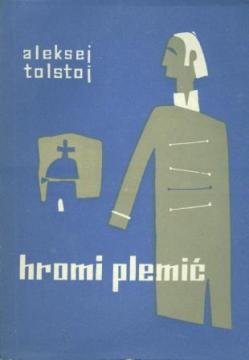
Hromi plemić

Hromi plemić

Aleksej K. Tolstoj

In the short story The Crippled Nobleman, the tragic fate of an unfortunate aristocrat becomes a parable about pride, pain, and transience. The author combines realism and romance into a deeply emotional story about human vulnerability and dignity.

The short story The Lame Nobleman by the Russian writer Alexei Konstantinovich Tolstoy (1817–1875) is a psychologically and morally layered work that explores human loneliness, sadness, and the need for love. Tolstoy, known for his historical novels, poetic ballads, and humorous stories, in this short story reaches a more intimate tone and shows compassion for a “little” man from the aristocratic class.

The main character, a nobleman who physically limps, is also marked by spiritual wounding. His lameness symbolizes not only a physical defect but also a sense of separation from the world, an inability to fit into a society that values ​​strength, youth, and external perfection. With an exceptional sense of psychological detail, Tolstoy depicts the inner life of a man struggling between pride and the need for closeness, between irony and sincere sadness.

The plot is simple, but charged with emotions: through everyday situations and encounters, the hero discovers how cruel social judgments are and how difficult it is to preserve dignity in a world that mocks weakness. Against the backdrop of a realistic picture of the Russian province, the author builds a universal message about human equality and compassion.

The style of the story is characterized by elegance, gentle humor and romantic empathy for the character. In The Lame Nobleman, Tolstoy combines a sentimental tone with moral reflection, showing that the true greatness of a person comes from his inner strength, and not from social position or physical perfection.

This work thus becomes a symbolic study of pride, pain and self-esteem, one of the most humane and emotionally moving prose works of Alexei K. Tolstoy.

Original title
Хромой барин
Translation
Dragutin Mičović
Editor
Gojko Janjušević
Graphics design
Jovan Lukić
Dimensions
17 x 11 cm
Pages
142
Publisher
Progres, Novi Sad, 1962.
 
Latin alphabet. Paperback.
Language: Serbian.

One copy is available

Condition:Used, excellent condition
 

Are you interested in another book? You can search the offer using our search engine or browse books by category.

You may also be interested in these titles

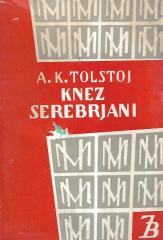
Knez Serebrjani

Knez Serebrjani

Aleksej N. Tolstoj
Matica hrvatska, 1961.
Croatian. Latin alphabet. Hardcover.
3.20 - 3.28
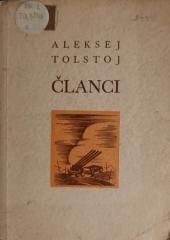
Članci (1942 - 1943)

Članci (1942 - 1943)

Aleksej N. Tolstoj
Nakladni zavod Hrvatske, 1945.
Croatian. Latin alphabet. Paperback.
2.65
Priče iz doba jazza

Priče iz doba jazza

Francis Scott Fitzgerald

F. Scott Fitzgerald, der Bote einer verlorenen Generation, zeichnet in dieser Sammlung von elf Erzählungen ein Bild der Zeit zwischen den beiden Weltkriegen: Hedonismus, der beißt, moralischer Verfall, der berauscht, und Jugend, die wie ein Feuerwerk bren

Šareni dućan, 2009.
Croatian. Latin alphabet. Paperback.
11.247.87
Pustolovina božićnog pudinga

Pustolovina božićnog pudinga

Agatha Christie

The Christmas Pudding Adventure (1960) ist eine Sammlung von sechs Kriminalgeschichten von Agatha Christie, in denen fünf Fälle von Hercule Poirot und einer von Miss Marple gelöst werden.

Globus, 1984.
Croatian. Latin alphabet. Hardcover with dust jacket.
4.76 - 6.58
Pionirska triologija: Sabrana djela Branka Ćopića #11

Pionirska triologija: Sabrana djela Branka Ćopića #11

Branko Ćopić

Adler fliegen früh – Glorreiche Kriegsführung – Schlacht im Goldenen Tal

Prosveta, 1964.
Serbian. Latin alphabet. Hardcover.
3.86
Bosonogo djetinjstvo: Sabrana djela Branka Ćopića #10

Bosonogo djetinjstvo: Sabrana djela Branka Ćopića #10

Branko Ćopić

Geschichten eines begeisterten Jungen – Jahre des Esels – Geschichten eines Partisanenmädchens – Durchbruchsgeschichten

Prosveta, 1964.
Serbian. Latin alphabet. Hardcover.
2.98