Volim sutra

Volim sutra

Faiza Guene

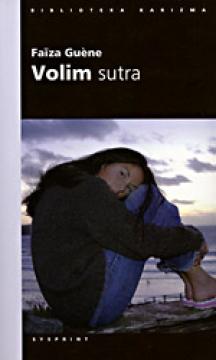
"I Love Tomorrow" is a semi-autobiographical novel-diary, a snippet from the life of Doria, a lively, witty, sharp and somewhat sassy fifteen-year-old who is slowly learning to look at the world positively.

It is also an atypical chronicle of the Parisian suburb of Livry-Gargan, in the famous 93rd arrondissement, known for its high rate of violence and large immigrant population, because it manages to avoid the trap of excessive pessimism and fatalism in a very intelligent way.

Doria has been living alone with her mother since her father, the “bearded man”, left them one morning, going to Morocco to find a younger and more fertile woman. Narrating a year of Doria’s life, Faïza Guène brings a gallery of funny and poetic portraits: Doria’s mother, a maid at the Formula 1 hotel in Bagnolet; her friend Hamoudi, an older boy from the neighborhood who has known her since she was “as big as a hashish bar”; Mrs. Burlaud, the school psychologist who wears halter tops and smells of lice shampoo; the social workers who pass by their small two-room apartment on assignment; her peer Nabil, who gives her instructions and takes the opportunity to steal her first kiss; or Aziz, a merchant whom Dorija tries in vain to set up with her mother, and he won't even invite them to his wedding. But that's okay - Dorija and her mother "don't care that they're not part of the jet set".

Bitter and fed up with everything, disappointed in everything except her mother's love, Dorija presents the problems of an entire schizoid generation of young French people who live between two cultures: the traditional culture of their parents' country and contemporary French culture.

Original title
Kiffe kiffe demain
Translation
Jelena Rajak
Editor
Edo Popović
Dimensions
23 x 14 cm
Pages
130
Publisher
Sys Print, Zagreb, 2006.
 
Latin alphabet. Paperback.
Language: Croatian.

One copy is available

Condition:Used, excellent condition
 

Are you interested in another book? You can search the offer using our search engine or browse books by category.

You may also be interested in these titles

Kreutzerova sonata, Hadži-Murat

Kreutzerova sonata, Hadži-Murat

Lav Nikolajevič Tolstoj

Kreutzer's sonata belongs to those works of Tolstoy that the writer adapted in many ways to his view on moral issues, on marital morality above all.

Civitas, 2004.
Croatian. Latin alphabet. Paperback.
4.983.74
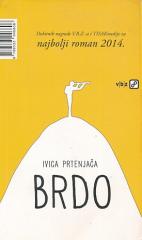
Brdo

Brdo

Ivica Prtenjača

It is a deeply disturbing text, full of emotions and traumatic experiences of a collapsed, imploded urban individual crying out for the meaning of life.

VBZ, 2014.
Croatian. Latin alphabet. Paperback.
7.82
Život je igra

Život je igra

Alberto Moravia

The book consists of several stories that explore the complexity of human behavior, often through an ironic and satirical depiction of everyday life.

Svjetlost, 1965.
Serbian. Latin alphabet. Paperback.
3.46 - 3.72
Zagrepčanka

Zagrepčanka

Branislav Glumac

Branislav Glumac published a novel without periods or commas in 1974, as the relentless stream of thought of a young rebel. Published in socialist Yugoslavia, the work caused a scandal with its openness and became a classic about generational rebellion.

IROS, 1986.
Croatian. Latin alphabet. Hardcover.
8.24
Deobe 1-3

Deobe 1-3

Dobrica Ćosić

This work, awarded the NIN Prize for that year, is considered one of the most significant in Serbian literature after World War II.

Prosveta, 1961.
Serbian. Cyrillic alphabet. Hardcover with dust jacket.
The book consists of 3 volumes
11.42
Deobe

Deobe

Dobrica Ćosić

Deobe is a novel about the tragic division of Serbs into Chetniks and Partisans during World War II. Winner of the NIN Award, it is part of a wider epic trilogy, inspired by Ćosić's experiences and historical documents.

Prosveta, 1963.
Croatian. Latin alphabet. Hardcover with dust jacket.
13.74