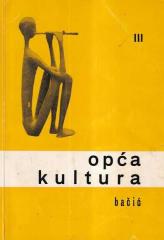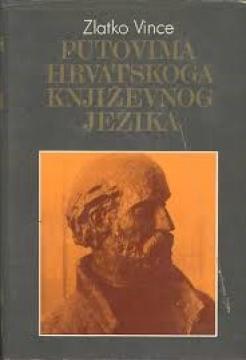
Putovima hrvatskoga književnog jezika

Putovima hrvatskoga književnog jezika

Zlatko Vince

The book is still required reading at philological faculties today because it systematically connects language with literature and social context for the first time. It is written clearly, without ideological exclusivity, which was a rarity in 1990.

The book is a classic overview of the history of the Croatian literary language from the oldest monuments to the end of the 20th century. Vince divides the development into five main periods:

  • Old Croatian (9th–15th century) – Church Slavonic as a literary language, but with a strong penetration of the folk Čakavian element (Bašćanska ploča, canons, prayer books).
  • Renaissance and humanism (15th–17th century) – trilingualism (Čakavian, Štokavian, Kajkavian) and the first standardization: Marulić, Hektorović, Zoranić, Vetranić. The Ozalj circle as a peak.
  • Enlightenment and Renaissance (18th–19th century) – conflict between Kajkavian (Reljković) and Štokavian; victory of the Štokavian-Ijekavian model among the Illyrians and Gaj's orthography 1835–1850.
  • 19th century – “golden age”: from Vraz–Mažuranić–Senoa to Kranjčević; standardization of grammar (Daničić, Maretić) and dictionaries (Broz-Iveković).
  • 20th century – new challenges: Croatian-Serbian “unified language” 1918–1991, purist resistance (Krstić, Brozović), and finally the establishment of an independent Croatian standard after 1991.

Vince shows in detail how the Croatian literary language has always been a multivariate standard (three dialects, three scripts) and how political history has constantly influenced the standard.

Graphics design
Alfred Pal
Dimensions
24 x 17 cm
Pages
695
Publisher
Nakladni zavod Matice hrvatske, Zagreb, 1990.
 
Latin alphabet. Hardcover with dust jacket.
Language: Croatian.

One copy is available

Condition:Used, excellent condition
Discounted price: 17.2613.81
20% discount is valid until 3/22/26 11:59 pm
 

Are you interested in another book? You can search the offer using our search engine or browse books by category.

You may also be interested in these titles

Dizanje prošlosti u vazduh: Ogledi o Balkanu i Istočnoj Evropi

Dizanje prošlosti u vazduh: Ogledi o Balkanu i Istočnoj Evropi

Marija Todorova

Eine Aufsatzsammlung der bulgarischen Historikerin Maria Todorova (bekannt für „Imaginary Balkans“), speziell für die Bibliothek des 20. Jahrhunderts zusammengestellt. Unverzichtbar für das Verständnis postkommunistischer Transformationsprozesse, der Erin

Biblioteka XX vek, 2010.
Serbian. Latin alphabet. Paperback.
8.44
Kako ostati bez domovine: Sedam koraka od demokracije do diktature

Kako ostati bez domovine: Sedam koraka od demokracije do diktature

Ece Temelkuran

In ihrem Buch analysiert Ece Temelkuran, wie Gesellschaften allmählich in den Autoritarismus abgleiten. Anhand persönlicher Erfahrungen und globaler Beispiele deckt sie Muster des Verlusts von Freiheit, Mitgefühl und Wahrheit in der modernen Welt auf.

Naklada Ljevak, 2019.
Croatian. Latin alphabet. Paperback.
12.32
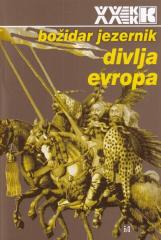
Divlja Evropa

Divlja Evropa

Božidar Jezernik

Im Zentrum von Jezerniks wissenschaftlicher Arbeit stehen ethnologische und anthropologische Forschungen auf dem Balkan und in Osteuropa.

Biblioteka XX vek, 2007.
Serbian. Latin alphabet. Paperback.
9.98
Kreativne industrije

Kreativne industrije

John Hartley

„Creative Industries“ ist eine kühne Sammlung von Essays, die die turbulente Revolution nachzeichnet, die die Produktion, den Konsum und das Verständnis von Kultur in einer Ära allumfassender Vernetzung verändert.

Multimedia Clio, 2007.
Serbian. Latin alphabet. Hardcover.
14.98
Što su Česi?: kratki pregled činjenica i pokušaj objašnjenja

Što su Česi?: kratki pregled činjenica i pokušaj objašnjenja

Jan Patočka

In dem Ihnen vorliegenden Buch hat Jan Patočka einen paradigmatischen Essay über die mitteleuropäische Identität eines slawischen Volkes verfasst.

Durieux, 2000.
Croatian. Latin alphabet. Paperback.
7.746.19
Simbolizam i tumačenje

Simbolizam i tumačenje

Tzvetan Todorov

In seinem Buch untersucht Todorov das Verhältnis zwischen der Produktion von Diskurs (Rhetorik) und seiner Interpretation (Hermeneutik), wobei er sich auf den verbalen Symbolismus konzentriert – das Phänomen der indirekten Bedeutung, die auf der direkten,

Svetovi, 1986.
Serbian. Latin alphabet. Paperback with dust jacket.
9.54