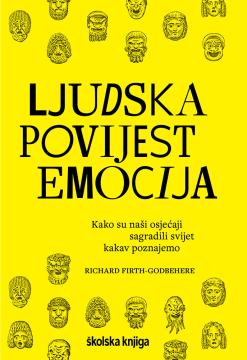
Ljudska povijest emocija: Kako su naši osjećaji sagradili svijet kakav poznajemo
In diesem provokanten und interdisziplinären Buch zeigt der Autor, dass Emotionen keine universellen biologischen Konstanten sind, sondern sich im Laufe der Zeit, in verschiedenen Kulturen und sozialen Kontexten verändern – und dass es gerade diese Emotio
Die Menschen halten sich gern für rationale Wesen, die dank Vernunft und Kalkül überlebt haben. Doch der Autor argumentiert das Gegenteil: Die wichtigsten historischen Momente – von der Entstehung der Philosophie und der großen Religionen über den Untergang des Römischen Reiches und die Wissenschaftliche Revolution bis hin zu den blutigsten Kriegen – wurden von Gefühlen und nicht von nüchternen Fakten bestimmt.
Das Buch nimmt den Leser mit auf eine weite Reise durch die Geschichte und verschiedene Kulturen: vom antiken Griechenland (wo „Melancholie“ ein Ungleichgewicht der Körpersäfte und keine Depression war) über Indien, Gambia, Japan und das Osmanische Reich bis in die modernen Vereinigten Staaten. Der Autor greift auf Erkenntnisse aus Psychologie, Neurowissenschaften, Philosophie, Kunst und Religionsgeschichte zurück, um zu zeigen, wie sich das Verständnis und die Erfahrung von Emotionen gewandelt haben – von den „Leidenschaften der Seele“ im Mittelalter über den Begriff der „Emotionen“ als modernes Konzept im 19. Jahrhundert bis hin zu den heutigen emotionalen „Regimen“ und „Skripten“.
Emotionen sind soziale Konstrukte, die Gesetze, Kriege, Kunst, Religion und den Alltag beeinflussen. Das Buch zeigt, wie Angst, Scham, Wut, Liebe und Ekel soziale Normen, Imperien und Revolutionen geprägt haben. Firth-Godbehere betont, dass unsere Gefühle und Überzeugungen darüber die Welt aktiv geformt haben – und sie auch heute noch formen.
Es handelt sich um eine zugängliche und zugleich tiefgründige Synthese der wachsenden Disziplin der „Geschichte der Emotionen“, die uns dazu anregt, zu hinterfragen, wie viel von unseren Gefühlen „natürlich“ und wie viel kulturell bedingt ist. Letztlich enthüllt das Buch, wie viel der Menschheitsgeschichte tatsächlich die Geschichte des Herzens und nicht nur des Verstandes ist.
One copy is available