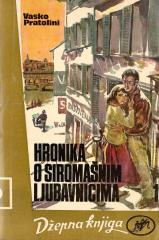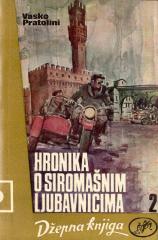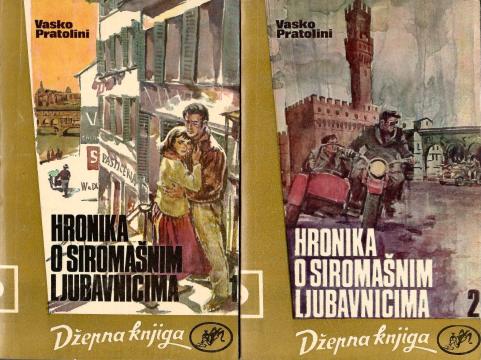
Hronika o siromašnim ljubavnicima
U Firenci 1925–1926, u siromašnoj ulici Via del Korno, stanovnici žive u ljubavi, siromaštvu i strahu. Dolazak fašizma uništava zajednicu: ljubavnici se svađaju, neki ginu od nasilja, ali narodna solidarnost opstaje.
„Hronika siromašnih ljubavnika“ (1947) Vaska Pratolinija je klasično neorealističko delo italijanske posleratne književnosti. Roman je horski prikaz života u firentinskoj ulici via del Corno – uskoj, siromašnoj ulici blizu centra grada – između 1925. i 1926. godine, tokom uspona i konsolidacije fašističkog režima.
Priča se vrti oko stanovnika ulice (tzv. „cornacchiai“): radnika, zanatlija, malih trgovaca i njihovih porodica. Glavni likovi su mladi parovi poput Marija i Milene (čista, idealistička ljubav), senzualne veze Aurore i rudara uglja Nesija, i drugih – Bjanke, Klare, Masistea, Uga. Život je obeležen siromaštvom, međusobnom povezanošću (svi znaju sve o svima), ljubavima, svađama i strahom.
Pratolini suptilno upliće istorijski kontekst: uspon fašizma donosi nasilje (manganeli, skvadristi), ucenu, strah i podele. Likovi poput fašista Karlina i Osvalda, „Sinjore“ (bivše kurtizane koja kontroliše imovinu i sarađuje sa režimom) ili antifašista poput Maćistea ilustruju sukob. Nasilje kulminira smrću nekih likova (npr. Maćiste koga ubijaju fašisti), patnjom žena i uništavanjem ravnoteže.
Roman koristi tehniku „hronike“ u istorijskom sadašnjosti, što daje osećaj večnosti i neposrednosti. Bez patetike, realistično i lirski, prikazuje solidarnost siromašnih, otpor fašizmu odozdo i ljubav kao utočište u tami. Jedno od najvažnijih dela neorealizma, prevedeno na srpski/hrvatski kao „Hronika siromašnih ljubavnika“ (npr. Liber, Zagreb 1982), snimljeno 1954. (režija Karlo Licani).
The book consists of two volumes.
Jedan višetomni primjerak je u ponudi.