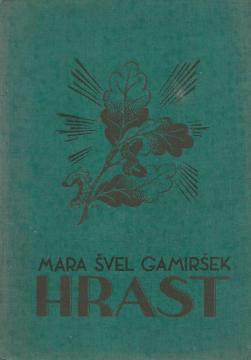
Hrast
A political novel, it covers the period from 1915 to the beginning of World War II in the Šokac Posavina region. Through the fates of ordinary people and families, it depicts historical ruptures, national turmoil, war suffering, and the connection between
Mara Švel-Gamiršek (1900–1975), a prominent Croatian writer of Šokac origin, published the novel Hrast in 1942, published by Matica Hrvatska. The work represents the central and most ambitious part of her so-called Šokac cycle (along with Šuma i Šokac, Portrete nepoznatih žena and the later novel Ovim šorom Jagodo).
The novel chronologically continues the events of Šuma i Šokac and follows life in Slavonian villages (the area of Županja, Posavina and Cvelferija) from World War I through the Kingdom of Yugoslavia to before World War II. The author masterfully combines the personal destinies of ordinary Šokac people with major historical events – wars, political changes, national upheavals and social crises.
The title Hrast symbolizes the strength, roots and steadfastness of the Slavonian man and his land. Švel-Gamiršek emphasizes the deep symbiosis between man and the native landscape, and lyrical descriptions of nature are often contrasted with dramatic historical ruptures. The novel is realistic with lyrical passages, rich in Šokac dialect and folklore, and the emphasis is on moral strength, family values, and the resilience of the common people.
Critics have labeled it a political novel because it provides a broad overview of 20th-century Croatian history from a Šokac perspective. The style is accessible, warm, and narrative, with an emphasized spiritual and human dimension.
Oak is considered one of the most successful novels on the Šokac theme in Croatian literature. After 1945, it was neglected for ideological reasons, but today it is once again appreciated as an important testimony to Slavonian identity, tradition, and the historical traumas of the 20th century. The antiquarian edition is rare and sought after.
One copy is available