Jučer je bilo danas

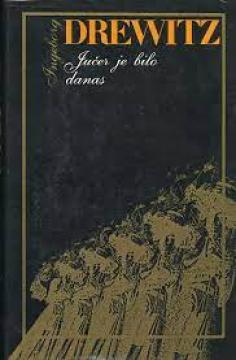
Jučer je bilo danas

Ingeborg Drewitz

The novel Yesterday Was Today by German writer Ingeborg Drewitz follows the life of Gabriela, born in 1923, from childhood to old age, intertwining her personal story with the historical and social changes of the 20th century in Germany.

Through Gabriele’s portrait, the novel depicts the fates of several generations of women – her grandmother, mother and daughter Renate – depicting their struggle with patriarchal norms, war trauma and social expectations.

The plot begins in the Weimar Republic, where Gabriele grows up witnessing the rise of Nazism, World War II and post-war reconstruction. Her life is marked by losses, adjustment to bomb destruction and moral dilemmas, but also the search for her own identity. The novel deals with themes such as women’s emancipation, family relationships and conflicts between generations, as Gabriele tries to reconcile her dreams with the reality of a divided German society. Drewitz uses her story as a mirror of history, exploring how political and social events shape intimate lives.

Through a precise yet emotional style, the author emphasizes the universality of women’s experience, while at the same time criticising social structures that limit freedom. The novel is significant for German literature for its feminist approach and strong historical context, offering insight into the complexity of human destinies in turbulent times.

Original title
Gestern war heute
Translation
Mirjana Buljan
Editor
Mirjana Buljan
Dimensions
21 x 14 cm
Pages
347
Publisher
Globus, Zagreb, 1985.
 
Latin alphabet. Hardcover with dust jacket.
Language: Croatian.

Multiple copies are available

Copy number 1

Condition:Used, excellent condition

Copy number 2

Condition:Used, excellent condition

Copy number 3

Condition:Used, excellent condition
 

Are you interested in another book? You can search the offer using our search engine or browse books by category.

You may also be interested in these titles

Deobe 1-3

Deobe 1-3

Dobrica Ćosić

This work, awarded the NIN Prize for that year, is considered one of the most significant in Serbian literature after World War II.

Prosveta, 1961.
Serbian. Cyrillic alphabet. Hardcover with dust jacket.
The book consists of 3 volumes
11.42
Proces

Proces

Franz Kafka

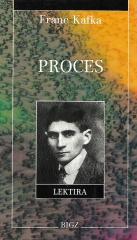
Kafka wrote The Process between 1914 and 1915, published posthumously in 1925. The novel is unfinished but with an added final chapter by Max Brod. Edition with a foreword by B. Živojinović and an afterword by Walter Killi.

BIGZ, 1990.
Serbian. Latin alphabet. Paperback.
4.26
Krčma

Krčma

Julian Stryjkowski

The book "Inn" by Julian Stryjkowski, published in 1977, explores life in a small Jewish village in Galicia during the 19th century.

BIGZ, 1977.
Serbian. Latin alphabet. Paperback.
4.38
Kreutzerova sonata, Hadži-Murat

Kreutzerova sonata, Hadži-Murat

Lav Nikolajevič Tolstoj

Kreutzer's sonata belongs to those works of Tolstoy that the writer adapted in many ways to his view on moral issues, on marital morality above all.

Civitas, 2004.
Croatian. Latin alphabet. Paperback.
4.98
Crna kutija

Crna kutija

Amos Oz

The Black Box is a kaleidoscope of married life and love relationships. It is a novel that implicitly speaks about all of us.

Hena Com, 2001.
Croatian. Latin alphabet. Hardcover.
10.98
Tri mušketira 1-2

Tri mušketira 1-2

Alexandre Dumas

Dumas' version of the story depicts the adventures of d'Artagnan and his friends from 1625 to 1628.

Epoha, 1966.
Croatian. Latin alphabet. Hardcover with dust jacket.
The book consists of two volumes
9.48