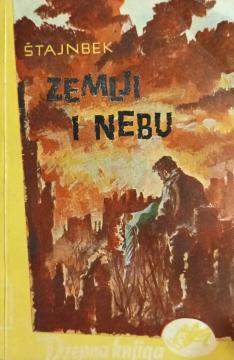
Zemlji i nebu
Steinbeck's early work from 1933, written with difficulty, announces motifs from East of Eden. A hit among lovers of mysticism and ecology - a mystical novel about man's deep connection with the earth and the conflict between pagan spirituality and Christ
The main character, Joseph Wayne, the third son of rancher John Wayne, leaves his home in Vermont with his father's blessing and heads for California. There, in the Nuestra Señora Valley, he buys a ranch under a large oak tree, which he feels is the embodiment of his father's spirit. He invites his brothers to join him on neighboring lands: the eldest, Burton, a devout Christian married to Harriet; Thomas, an animal lover married to a strong-willed woman, Rama; and the youngest, Benjy, an irresponsible drunk married to Jennie. Together they build a family estate.
Joseph marries literature teacher Elizabeth McGregor from Monterey, who bears him a son, little John. He hires Juanito, a faithful vaquero (who claims Castilian descent but is of Indian descent), who introduces him to local legends about periodic "dry years" and a sacred, eerie, moss-covered stone by a spring in a pine forest - a place of awe and worship.
Benjy's infidelity leads to tragedy: Juanito stabs and kills him after catching him seducing his wife Alice. Overwhelmed with guilt, Juanito begs Joseph to kill him in revenge, but Joseph refuses, suggesting they cover it up as an accident. Juanito runs away, promising to return one day.
Inspired by the advice of an old Mexican, Joseph organizes a pagan New Year's fiesta full of debauchery and dancing, which horrifies Burton, who - under the influence of the strict Christianity of the priest Father Angelo - armors the oak tree in anger, symbolically killing Joseph's "god".
Without rain in winter come terrible drought years, destroying crops and livestock. To calm Elizabeth's fear of the sacred field, Joseph takes her there; she climbs on a moss-covered stone, slips, breaks her neck and dies. Devastated, Joseph leaves little John to Rama and remains alone.
As the spring dries up and the land seems dead, Joseph realizes that he is its living heart. In a final sacrifice, he slits his wrists on the sacred stone, spilling his blood to “water” it. As he breathes his last, rain finally falls, renewing the valley.
Angeboten wird ein Exemplar