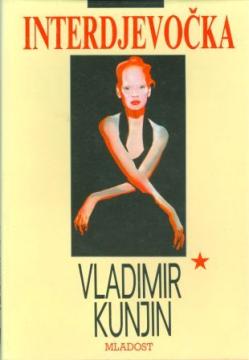
Interdjevočka

Interdjevočka

Vladimir Kunjin

The novel follows the life of a Moscow nurse who works at night as an "intergirl" - a prostitute for foreigners. The novel depicts moral dilemmas, economic despair and the collapse of values ​​in late Soviet society.

Interdjevočka by Vladimir Kunjin is a novel that powerfully portrays the late Soviet everyday life through the fate of Tatiana Zaitseva, a nurse from Moscow who, due to her low salary and hopeless life, starts working as an "interdjevočka" - a prostitute specializing in foreigners. Kunjin realistically portrays an environment in which Soviet bureaucracy, black market, social inequality and moral hypocrisy intertwine in the grayness of everyday life. Tatjana lives a double life: modest and hard-working during the day, part of half a world at night that functions outside the official morality of the state.

The novel explores in detail her inner struggle between the desire for a better life and the awareness of the price she pays. Through relationships with customers, friends from the same milieu, colleagues and family, Kunjin exposes a society where resourcefulness and survival are more important than ideological slogans. Tatiana's decision to marry a foreigner and leave the USSR is shown as an attempt to escape from her own reality, but also as an act of deep insecurity - because freedom promises a lot, but does not solve everything.

The work is direct, realistic and socially critical, without romanticizing or moralizing. Through Tatjana, Kunjin depicts an entire epoch – a collapsing system, people who manage as they know how, and an individual torn between desires and limitations. Intergirl remains a powerful depiction of the disintegration of values ​​and intimacy of a woman trying to survive in a world that offers her very few choices.

Translation
Irena Lukšić
Editor
Zvonimir Majdak
Graphics design
Fadil Vejzović
Dimensions
20 x 14.2 cm
Pages
151
Publisher
Mladost, Zagreb, 1990.
 
Distribution: 4,000 copies
 
Latin alphabet. Hardcover with dust jacket.
Language: Croatian.
ISBN
8-60-500446-0

One copy is available

Condition:Used, excellent condition
 

Are you interested in another book? You can search the offer using our search engine or browse books by category.

You may also be interested in these titles

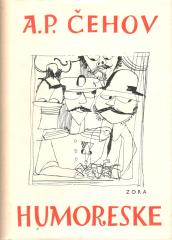
Sabrana djela A. P. Čehova #1: Humoreske

Sabrana djela A. P. Čehova #1: Humoreske

Anton Pavlovič Čehov

This book includes Chekhov's works from 1880-1885, i.e. humoresques, short stories, and sketches, starting with Letters to a Learned Neighbor, which Chekhov considered the beginning of his literary career.

Zora, 1959.
Croatian. Latin alphabet. Hardcover with dust jacket.
9.54
Djela #15: Pripovetke / Drame

Djela #15: Pripovetke / Drame

Maksim Gorki

The book contains the following stories and plays: Three Days, Theft, Criminals, Thefts, Fake Money and The Old Man.

Kultura, 1949.
Serbian. Latin alphabet. Hardcover.
4.56
Sabrana djela A. P. Čehova #5: Kaštanka i druge novele

Sabrana djela A. P. Čehova #5: Kaštanka i druge novele

Anton Pavlovič Čehov

The fifth book in a row of works by this great classic of Russian humor contains mainly his literary work from 1887. In this volume, the reader will find a number of already celebrated and well-known, as well as a large number of previously unpublished no

Zora, 1959.
Croatian. Latin alphabet. Hardcover with dust jacket.
9.84
Moskva – Petuški

Moskva – Petuški

Venjedikt Jerofejev

Venedikt Yerofeyev's postmodern prose poem is today considered a classic of new Russian literature. It is compared to Gogol and Kharms for its poetics of absurdity, satire, and metaphysical depth.

LOM, 217.
Serbian. Cyrillic alphabet. Paperback.
11.24
Džingis-kan

Džingis-kan

Vasilij Jan

Vasily Yan's novel Genghis Khan depicts the rise of the Mongol leader Temujin, from childhood in the steppes to the creation of the largest empire in the world, highlighting his courage, cruelty, and relentless will to power.

Rad, 1988.
Serbian. Latin alphabet. Hardcover.
9.78
Poziv na pogubljenje

Poziv na pogubljenje

Vladimir Nabokov

There is no doubt that it is most attractive to read The Call to Execution as it appears to be written, as an anti-utopian or anti-totalitarian novel...

Nolit, 1988.
Serbian. Latin alphabet. Hardcover with dust jacket.
12.32