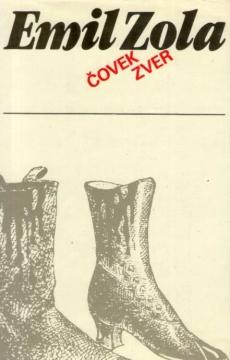
Čovek zver

Čovek zver

Émile Zola

The main character, Etienne Rouen, represents the archetypal figure of a modern man whose character is marked by inner brutality.

He is an industrialist obsessed with power, ambition and material wealth. In his relentless pursuit of success, Etienne turns into an immoral being who uses and manipulates others to satisfy his own selfish ends. Through vivid descriptions of the industrial revolution and social tensions, Zola explores the dark side of human nature, the corruption and dehumanization that result from greed and the desire for power. The novel raises questions about morality, guilt, and the consequences of selfish actions. "The Beast Man" is a book that often causes controversy due to its explicitness and pessimistic view of human nature. However, it also offers deep insights into social problems and provides insight into the mechanisms of power and their impact on the individual and society. Zola's writing style is detailed and suggestive, conjuring vivid images of the setting in which the action takes place. "Beast Man" is a novel that provokes thinking about moral issues and places a mirror in front of the reader, forcing him to face the dark sides of human nature. It is important to note that this book is part of a wider cycle of novels by Emil Zola and that understanding the context and other works from that cycle is useful for a complete understanding of "Beast Man" and its themes.

Original title
La bete humaine
Translation
Živojin Živojinović
Editor
Radovan Ždrale
Graphics design
Bogdan Kršić
Dimensions
20 x 14 cm
Pages
348
Publisher
Matica srpska, Novi Sad, 1986.
 
Distribution: 10,000 copies
 
Latin alphabet. Hardcover with dust jacket.
Language: Serbian.

One copy is available

Condition:Used, excellent condition
Damages or inconvenience notice:
  • Traces of patina
 

Are you interested in another book? You can search the offer using our search engine or browse books by category.

You may also be interested in these titles

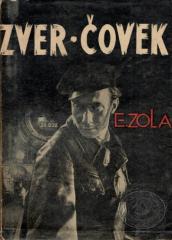
Zver-čovek

Zver-čovek

Émile Zola

The novel explores the destructive forces of inheritance, passion, and violence in modern industrial society. The action takes place largely on the railroad, a symbol of speed, destiny, and inevitable doom. “Beast Man” is the first description of crime in

Nolit, 1940.
Serbian. Latin alphabet. Paperback with dust jacket.
56.32
Trovačnica

Trovačnica

Émile Zola

The novel The Poisoner was published in sequels during 1876, and in book form in 1877. It is the story of a woman's struggle for happiness in the working class of Paris.

Rad, 1955.
Serbian. Latin alphabet. Hardcover with dust jacket.
8.626.47 - 9.99
Stranica ljubavi

Stranica ljubavi

Émile Zola
Rad, 1974.
Serbian. Latin alphabet. Hardcover.
5.84
Deobe 1-3

Deobe 1-3

Dobrica Ćosić

Ovo delo, nagrađeno NIN-ovom nagradom za tu godinu, smatra se jednim od najznačajnijih u srpskoj književnosti posle Drugog svetskog rata. Prvo izdanje.

Prosveta, 1961.
Serbian. Cyrillic alphabet. Hardcover with dust jacket.
The book consists of 3 volumes
11.42
Usta puna zemlje

Usta puna zemlje

Branimir Šćepanović

Roman „Usta puna zemlje“ (1970), remek-delo srpskog pisca Branimira Šćepanovića, psihološki je dubinski istraživač granica ljudske duše, samoće i egzistencijalne slobode, podsećajući na Kafku i Kamija.

BIGZ, 1987.
Serbian. Latin alphabet. Paperback.
3.98
Deobe

Deobe

Dobrica Ćosić

„Deobe“ ist ein Roman über die tragische Spaltung der Serben in Tschetniks und Partisanen während des Zweiten Weltkriegs. Der mit dem NIN-Preis ausgezeichnete Roman ist Teil einer größeren epischen Trilogie, die von Ćosićs Erfahrungen und historischen Dok

Prosveta, 1963.
Croatian. Latin alphabet. Hardcover with dust jacket.
13.74