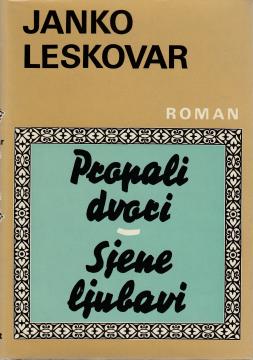
Propali dvori / Sjene ljubavi

Propali dvori / Sjene ljubavi

Janko Leskovar

"Propali dvori" is a novel by Janko Leskovar, published in 1896, which deals with deep psychological analyzes of the characters, emphasizing internal conflicts and feelings of disharmony with the outside world.

The action takes place in the surroundings of a ruined noble estate, which symbolizes decadence and the decay of former wealth. The main character, Fabijan Knezović, is a young man of humble origin, but highly educated and idealistic. Fabijan comes to the estate of the Kamiločević family, which is on the verge of financial ruin.

The family consists of the elderly Kamiločević, whose energy is spent, and his daughter Laura, a young but depressed woman, burdened by the burden of the family's past and social expectations. Fabijan falls in love with Laura, but that love is doomed in advance because of Laura's melancholy, which prevents her from finding happiness or a way out of her own psychological darkness.

Fabijan tries to help his family and restore the estate, believing in the power of work and will. However, faced with Laura's emotional coldness and his own growing doubts about the possibility of change, he eventually gives up on his attempts. Laura remains imprisoned in her suffering, and Fabijan leaves, deeply disappointed.

Dimensions
20 x 14 cm
Pages
263
Publisher
Mladost, Zagreb, 1978.
 
Latin alphabet. Hardcover with dust jacket.
Language: Croatian.

One copy is available

Condition:Unused
 

Are you interested in another book? You can search the offer using our search engine or browse books by category.

You may also be interested in these titles

Usta puna zemlje

Usta puna zemlje

Branimir Šćepanović

The novel "Usta puna zemlje" (1970), the masterpiece of the Serbian writer Branimir Šćepanović, is a psychologically in-depth explorer of the limits of the human soul, solitude and existential freedom, reminiscent of Kafka and Camus.

BIGZ, 1987.
Serbian. Latin alphabet. Paperback.
3.96 - 3.98
Đavoli dolaze

Đavoli dolaze

Miodrag Bulatović
Rad, 1986.
Serbian. Latin alphabet. Paperback.
1.16
Andrićeva lestvica užasa

Andrićeva lestvica užasa

Svetislav Basara

A Serbian writer known for his satirical novels, Andrić's Ladder of Horrors dissects the Balkan mentality through a parable of Yugo-nostalgia and national myths. The title alludes to Ivo Andrić as a litmus test for criticism – Balkans claim him or reject

24 sata, 2021.
Serbian. Latin alphabet. Paperback.
11.56
Deobe 1-3

Deobe 1-3

Dobrica Ćosić

This work, awarded the NIN Prize for that year, is considered one of the most significant in Serbian literature after World War II.

Prosveta, 1961.
Serbian. Cyrillic alphabet. Hardcover with dust jacket.
The book consists of 3 volumes
11.42
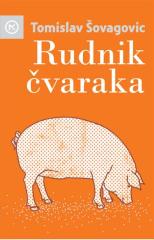
Rudnik čvaraka

Rudnik čvaraka

Tomislav Šovagović

The debut work of Croatian writer Tomislav Šovagović, awarded the Josip and Ivan Kozarac Award in 2012, is a dedication to Slavonia – the region of his childhood that the author, born in Dalmatia, observes with foreign but tender eyes.

Mozaik knjiga, 20112.
Croatian. Latin alphabet. Paperback.
11.56
Pripovetke iz levog i desnog džepa

Pripovetke iz levog i desnog džepa

Karel Čapek

These stories deal with different topics, although most deal with different criminal acts, from fraud and fortune-telling to marriage fraud and murder.

Jugoslavijapublik, 1980.
Croatian. Latin alphabet. Hardcover.
5.223.92