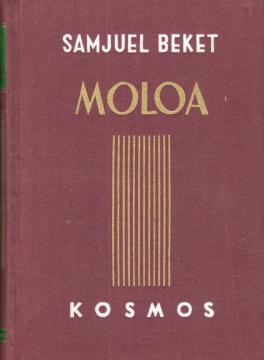
Moloa

Moloa

Samuel Beckett

The novel Molloy (1951) is the first part of Beckett's famous trilogy, along with Malone Dies and The Nameless. It is structured in two parts, each told from the perspective of a different narrator: first Molloy, then Jacques Moran.

In the first part, Molloy, old and physically frail, writes from his mother's room, with no memory of how he got there. He recalls a journey in search of his mother, during which he meets various characters and gets into absurd situations. His daily life is marked by bizarre habits, such as the ritualistic movement of pebbles in his pockets, which symbolizes his need for order in a chaotic world.

The second part follows Moran, a detective sent by his superior Gaber to find Molloy. Moran, initially organized and disciplined, gradually loses control of himself and his mission. His journey becomes introspective, and his transformation reflects the fundamental themes of the novel: the loss of identity and the meaninglessness of the human search for meaning.

Through Molloy, Beckett explores existential themes such as identity, memory, and the absurdity of existence. The novel is known for its experimental style, long monologues, and fragmented narration, which further emphasizes the sense of disorientation and meaninglessness.

Molloy is a key text of modernist literature and a significant contribution to the philosophy of existentialism, inviting the reader to reflect on the nature of existence and identity.

Original title
Molloy
Translation
Kaća Samardžić
Editor
Radomir Konstantinović
Graphics design
Mih. S. Petrov
Dimensions
20 x 14 cm
Pages
296
Publisher
Kosmos, Beograd, 1959.
 
Latin alphabet. Hardcover.
Language: Serbian.

One copy is available

Condition:Used, excellent condition
 

Are you interested in another book? You can search the offer using our search engine or browse books by category.

You may also be interested in these titles

Triologija: Molloy, Malone umire, Neimenjivi

Triologija: Molloy, Malone umire, Neimenjivi

Samuel Beckett

He has marked the contemporary era like few others, and his heroes or "heroes" with their emotional and moral dilemmas, weighed down by existential anxiety and news of cataclysms and possible apocalypses, are closer to us than ever.

Šareni dućan, 2014.
Croatian. Latin alphabet. Hardcover.
29.38
Aurorin poticaj

Aurorin poticaj

Erich Hackl

The work is based on a true event that occurred in Spain in 1933: Aurora Rodriguez killed her daughter Hildegart, a famous fighter for women's emancipation and a cult figure on the political scene of the time.

Mladost, 1990.
Croatian. Latin alphabet. Hardcover with dust jacket.
4.98
Eva Luna

Eva Luna

Isabel Allende

Eva Luna is a novel about a poor storyteller who weaves lives with words, written by Isabel Allende, the founder of Latin American magical realism. Published after the success of The House of the Spirits, this whirlwind of adventure combines love, revolut

Znanje, 1990.
Croatian. Latin alphabet. Hardcover with dust jacket.
8.36
Proces

Proces

Franz Kafka

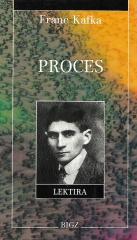
Kafka wrote The Process between 1914 and 1915, published posthumously in 1925. The novel is unfinished but with an added final chapter by Max Brod. Edition with a foreword by B. Živojinović and an afterword by Walter Killi.

BIGZ, 1990.
Serbian. Latin alphabet. Paperback.
4.26
Ulazeći u Varcar

Ulazeći u Varcar

Ivan Lovrenović

The hybrid book – a novel, poem and essay in one – is a dedication to his native Varcar, a small village in central Bosnia, where the author's roots intertwine with the history, myth and chaos of the 20th century.

Fraktura, 2016.
Croatian. Latin alphabet. Hardcover with dust jacket.
14.4212.98
Deobe 1-3

Deobe 1-3

Dobrica Ćosić

This work, awarded the NIN Prize for that year, is considered one of the most significant in Serbian literature after World War II.

Prosveta, 1961.
Serbian. Cyrillic alphabet. Hardcover with dust jacket.
The book consists of 3 volumes
11.42