Mjesec iznad Splita

Mjesec iznad Splita

Predrag Lucić

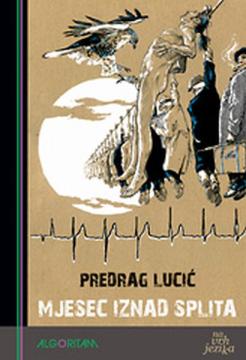
Predrag Lucić's second book of poetry, after "The Lovers from Verona" (2007), is a collection of irony, melancholy and contempt for canons - a dedication to the "ridicules" of Split, those who have woven their antics into the city's collective memory.

Through a dozen poems, Lucić brings to life characters like Karuz, a carpenter from Nazareth who becomes a Split marangun, or J.P. Kamov, a genius condemned to pauperism, where the moon looms over Split like an observer of other people's dreams and defeats. The poems are not just satire; they are hymns of courage and self-identity – the characters are not madmen, but mirrors of ourselves, full of Split's vitality, humor and sadness. "Karuzo" evokes biblical irony, "Mjesec iznad Splita" – an epic about a city where the sacred mixes with the profane, and love with escape.

Lucić's language is raw, rhythmic, full of Split dialect and surreal images: the moon as a witness, the sea as oblivion, the characters as "trainers" of existence. The collection is a critique of social hypocrisy, but also a love letter to his native Split – a place where unrest turns into art. After Lucić's death, the collection was published as part of "The Southern Courtyard" (2024), a legacy that makes him a significant author of the Croatian language.

Editor
Kruno Lokotar
Illustrations
Alem Ćurin
Dimensions
19 x 13 cm
Pages
175
Publisher
Algoritam, Zagreb, 2012.
 
Latin alphabet. Paperback.
Language: Croatian.

One copy is available

Condition:Used, excellent condition
 

Are you interested in another book? You can search the offer using our search engine or browse books by category.

You may also be interested in these titles

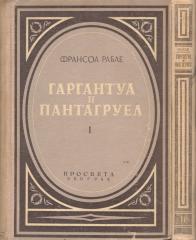
Gargantua i Pantagruel

Gargantua i Pantagruel

François Rabelais

Rabelais' masterpiece, a five-book novel cycle that follows the adventures of the giant Gargantua and his son Pantagruel. Vinaver, known for his linguistic virtuosity, masterfully conveys Rabelais's lavish humor, juicy swear words, and layered wordplay.

Kultura, 1950.
Serbian. Cyrillic alphabet. Hardcover.
The book consists of two volumes
11.34
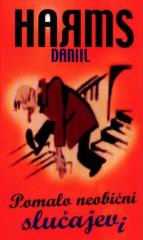
Pomalo neobični slučajevi

Pomalo neobični slučajevi

Daniil Ivanovič Harms

The second edition of stories, sketches, anecdotes and shorter pieces by a distinctive Russian writer who has gained numerous fans among the Croatian reading public, primarily because of the laughter that balances on a thin line - the dividing line betwee

Šareni dućan, 2001.
Croatian. Latin alphabet. Paperback.
10.26
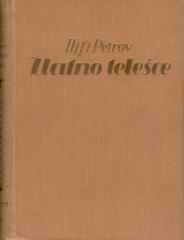
Zlatno telešce

Zlatno telešce

Ilja Iljf, Evgenij Petrov

The Golden Calf (1931) follows the ingenious con artist Ostap Bender, who in Soviet Russia during the first five-year plan seeks a secret millionaire in order to get rich, encountering the absurdity of bureaucracy, the new Soviet man, and his own downfall

Naklada Binoza, 1934.
Croatian. Latin alphabet. Hardcover with dust jacket.
9.74
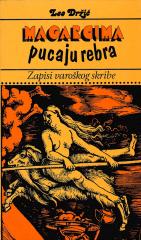
Magarcima pucaju rebra: Zapisi varoškog skribe

Magarcima pucaju rebra: Zapisi varoškog skribe

Leo Držić

In the novel Donkeys' Ribs Are Cracking - The Notes of a Town Scribe, Leo Držić humorously brings 17th-century Zagreb to life through the notes of clerk Dominik Pivarić. Through the conflicts between Gradec and Kaptol, a satirical chronicle of power, pett

Znanje, 1980.
Croatian. Latin alphabet. Paperback.
6.78
Žene, bajke, kraljice

Žene, bajke, kraljice

Nada Gašić, Julijana Adamović, Nataša Govedić, Vera Vujović, Lada Žigo, Jadranka Pintarić, Jadran...

Women, Fairy Tales, Queens – is the first in a series of story collections intended for an adult audience in which nine Croatian female writers decided to give voice to female characters from fairy tales.

Kreativna mreža, 2021.
Croatian. Latin alphabet. Paperback.
9.98