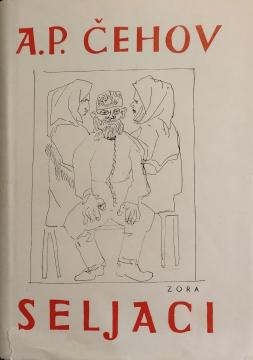
Sabrana djela A. P. Čehova #7: Seljaci i druge novele
Between 1892, when "The Fragment", the first novella in this book, was published, and "The Peasant" (1897) and "On the Carts" (1897), A. P. Chekhov made a series of other artistically successful observations of the society in which he lived.
If we mention only the novel "Cricket", which caused so much dust about Chekhov's private life (some acquaintances were the most angry with him, considering that he copied them in drawing the main female face) — all the way to "The Peasant", and that significant and vivid picture of the miserable life of a Russian little man, we will see how wide the artistic range of this great creator was. By working on the argument that people had suggested to him for years that the world and the psychology of man live on a few rubles, and by addressing this with his ideological and ethical credo, Chekhov, in the closest moral and artistic examples to us (»Sisters«, The Black Monk«, »Svojachanka« and others — all of which are collected in this book — managed to create classic examples of the modern Russian novella, not only in terms of composition but also in terms of topicality of content.
If we add that this book also contains »The House with a Mezzanine«, »My Life« and the aforementioned »Peasants«, then it is clear that this book contains one of the most mature periods of the great Russian writer's work. For no matter how brilliantly he broke through in literature with his "little things" — and no matter how much he later achieved success on the stage with his plays — in novels and plays such as »Anna of the Neck«, »Ariadne«, »Peasants« and others, he not only gave his credo in of art, but also in the formal aspect proved its greatness, proved that even in a small framework a lot can be given.
One copy is available