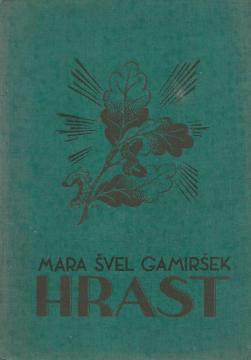
Hrast
Antiquität
Ein rares Buch

Hrast

Mara Švel-Gamiršek

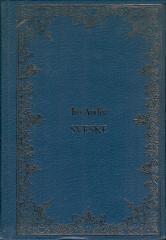
A political novel, it covers the period from 1915 to the beginning of World War II in the Šokac Posavina region. Through the fates of ordinary people and families, it depicts historical ruptures, national turmoil, war suffering, and the connection between

Mara Švel-Gamiršek (1900–1975), a prominent Croatian writer of Šokac origin, published the novel Hrast in 1942, published by Matica Hrvatska. The work represents the central and most ambitious part of her so-called Šokac cycle (along with Šuma i Šokac, Portrete nepoznatih žena and the later novel Ovim ​​šorom Jagodo).

The novel chronologically continues the events of Šuma i Šokac and follows life in Slavonian villages (the area of ​​Županja, Posavina and Cvelferija) from World War I through the Kingdom of Yugoslavia to before World War II. The author masterfully combines the personal destinies of ordinary Šokac people with major historical events – wars, political changes, national upheavals and social crises.

The title Hrast symbolizes the strength, roots and steadfastness of the Slavonian man and his land. Švel-Gamiršek emphasizes the deep symbiosis between man and the native landscape, and lyrical descriptions of nature are often contrasted with dramatic historical ruptures. The novel is realistic with lyrical passages, rich in Šokac dialect and folklore, and the emphasis is on moral strength, family values, and the resilience of the common people.

Critics have labeled it a political novel because it provides a broad overview of 20th-century Croatian history from a Šokac perspective. The style is accessible, warm, and narrative, with an emphasized spiritual and human dimension.

Oak is considered one of the most successful novels on the Šokac theme in Croatian literature. After 1945, it was neglected for ideological reasons, but today it is once again appreciated as an important testimony to Slavonian identity, tradition, and the historical traumas of the 20th century. The antiquarian edition is rare and sought after.

Illustrationen
Julius Meissner
Titelseite
Bogomil Šoban
Maße
20 x 14 cm
Seitenzahl
199
Verlag
Matica hrvatska, Zagreb, 1942.
 
Latein Schrift. Hardcover.
Sprache: Kroatisch.

Angeboten wird ein Exemplar

Zustand:Gebraucht, in ausgezeichnetem Zustand
Zum Warenkorb hinzugefügt!
 

Interessieren Sie sich für ein anderes Buch? Sie können das Angebot über unsere Suchmaschine suchen und finden oder Bücher nach Kategorien durchsuchen.

Diese Titel könnten Sie auch interessieren

Fabian: Pripovijest o moralistu

Fabian: Pripovijest o moralistu

Erich Kästner

Jakob Fabian, an unemployed Germanist and moralist, wanders through Berlin in the 1930s, observing the moral, political and social decay and the rise of Nazism. He falls in love with Cornelia, but tragedies and nonsense lead him to a tragic end. Criticism

Mladost, 1952.
Kroatisch. Latein Schrift. Taschenbuch.
5,32
Automat

Automat

Alberto Moravia

A collection of 41 short stories: the characters act like "automatons" – mechanical, listless, incapable of authentic reaction to life's problems. Modern man alienated, trapped in routine, sex, money and passivity, without will or feelings.

Otokar Keršovani, 1966.
Kroatisch. Latein Schrift. Hardcover.
3,22 - 3,96
Blizu kuće

Blizu kuće

Erskine Caldwell

"Close to Home" (1962) by Erskine Caldwell is a sharp, realistic novel about racism, hypocrisy, and social injustice in the American South during the era of segregation.

Svjetlost, 1964.
Kroatisch. Latein Schrift. Taschenbuch.
2,12
Blato

Blato

Milana Vlaović

Miana Vlaović's debut novel is a story about three generations of women in a patriarchal province, filled with recurring patterns of fate - love, betrayal, poverty, violence, and small struggles for dignity.

V.B.Z, 2007.
Kroatisch. Latein Schrift. Taschenbuch.
6,38
Jimmie Higgins

Jimmie Higgins

Upton Sinclair

Jimmie Higgins (1919) is a novel that follows the life of humble laborer Jimmie Higgins, a symbol of the working class in America. Set against the backdrop of World War I, the novel explores themes of class struggle, political activism, and personal sacri

Kultura, 1948.
Kroatisch. Latein Schrift. Hardcover.
4,86
Hronika o siromašnim ljubavnicima

Hronika o siromašnim ljubavnicima

Vasco Pratolini

In Florence 1925–1926, in the poor Via del Corno, the residents live in love, poverty and fear. The arrival of fascism destroys the community: lovers fight, some die from violence, but popular solidarity survives.

Svjetlost, 1966.
Serbisch. Latein Schrift. Taschenbuch.
Das Buch besteht aus zwei Bänden
4,56