Émile Zola

Émile Zola

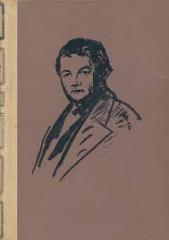
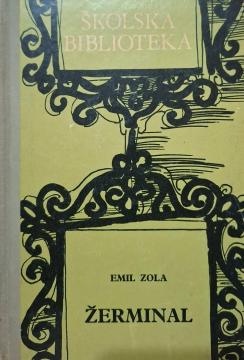
Žerminal

In his best work, Germinal, Émile Zola realistically, in minute detail, described the inhuman living and working conditions of miners in northern France in the 1860s.

Germinal is a novel published in 1885, one of the most important in Zola's "Rougon-Macquart" cycle. The main character, Étienne Lantier, a young worker who lost his job due to his impetuous nature, comes to the mining settlement of Montsou and gets a job at the Voreux mine. There, he witnesses the brutal working conditions, injustice, and misery that plagues the mining families. Étienne becomes increasingly politically aware, embraces socialist ideas, and organizes a strike in an effort to get workers better conditions and wages. The strike, initially full of hope, soon develops into a struggle for bare survival. The government and mining employers brutally suppress the rebellion, and the strikers and their families suffer hunger and death. The mine becomes a symbol of the relentless force that grinds the workers down. Despite the defeat, the novel ends with symbolic hope: Germinal – a month in the French revolutionary calendar that marks the awakening of nature – suggests that, like spring, workers' resistance will once again flourish. In "Germinal," Zola masterfully combines a naturalistic depiction of misery with strong emotion and social engagement. The work remains one of the most powerful depictions of social injustice in literature.

Translation
Dušan Matić
Editor
Muris Idrizović
Graphics design
Mladen Kolobarić
Dimensions
17 x 12 cm
Pages
541
Publisher
Svjetlost, Sarajevo, 1967.
 
Latin alphabet. Hardcover.
Language: Serbian.

One copy is available

Condition:Used, very good condition
 

Are you interested in another book? You can search the offer using our search engine or browse books by category.

You may also be interested in these titles

Pariški pokolj

Pariški pokolj

Jean Cassou
Naklada Binoza, 1936.
Croatian. Latin alphabet. Hardcover with dust jacket.
19.74 - 21.46
Evgenija Grande

Evgenija Grande

Honore de Balzac

"Eugénie Grandet" (1833), part of Balzac's Human Comedy, is a realistic novel that explores greed, family relationships, and the sacrifices of love in provincial French society.

Veselin Masleša, 1989.
Croatian. Latin alphabet. Hardcover.
4.98
Četrdeset pet vitezova, sv. 1-2

Četrdeset pet vitezova, sv. 1-2

Alexandre Dumas

Alexandre Dumas – The Forty-Five Knights, published in 1966, is part of a grand trilogy about the political and religious turmoil in France during the late 16th century.

Epoha, 1966.
Croatian. Latin alphabet. Hardcover with dust jacket.
The book consists of two volumes
9.48
Robin Hood

Robin Hood

Alexandre Dumas

Dumas portrays Robin Hood not only as a bandit who helps the poor, but also as a heroic fighter for justice and a symbol of resistance to feudal injustice.

Epoha, 1966.
Croatian. Latin alphabet. Hardcover with dust jacket.
4.26 - 4.82
Posada

Posada

Joseph Kessel

The novel is considered one of Kessel's most significant works, inspired by his experiences as a pilot during World War I.

Minerva, 1987.
Serbian. Latin alphabet. Hardcover.
4.38
Evgenija Grande / Muzej starina

Evgenija Grande / Muzej starina

Honore de Balzac

In his novels Eugenie Grandet (1833) and The Museum of Antiquities (1837), Balzac explores universal themes of greed, human passions, sacrifice, and moral dilemmas, placing them in different social contexts of 19th-century French society.

Svjetlost, 1963.
Croatian. Latin alphabet. Hardcover.
3.48