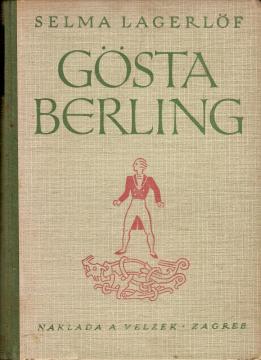
Gøsta Berling
The novel follows the failed priest Gøsta Berling, who, in the company of unusual characters on Ekeby, goes from a debauched wanderer to a man capable of love, responsibility and moral revival.
The novel Gøsta Berling by the Swedish author Selma Lagerlöf is one of the most important works of Nordic literature and a prominent example of the romantic narrative style intertwined with folk legends, folklore and moral motifs. The story is set in Värmland, in a vast and mysterious landscape that Lagerlöf shapes as a separate mythical space, as important as the characters themselves.
At the center of the story is Gøsta Berling, a failed priest whose weakness for pleasure and inability to fit into strict social frameworks lead him to social decline. In Ekeby, an estate known for its group of peculiar "knights", he finds temporary refuge among people who defy conventions, living freely, often chaotically, but also with a spark of nobility. Lagerlöf gradually builds his path of self-knowledge, showing how Gøsta transforms from a man abandoned to his weaknesses into a character who can love, sacrifice and take responsibility.
The novel is characterized by a rich gallery of strongly formed female characters – from the dominant and almost mythical Maestro Ekeby to the mysterious Elisabet, whose relationship with Gøst represents the moral and emotional backbone of the work. Through their fates, the author explores the themes of freedom, temptation, love and redemption, giving the narrative ethical depth.
The work is interwoven with legendary episodes, fantastic motifs and powerful images of Nordic nature that reflect the emotional states of the characters. Lagerlöf combines realistic and romantic elements in a narrative that rests on the rhythm of oral tradition. The novel thus becomes a story of human weakness and strength, of the possibility of renewal and faith in good, which has earned it a permanent place in European literature.
One copy is available
- Slight damage to the cover