Selo Straumen: kronika lotiškog imanja
Antique

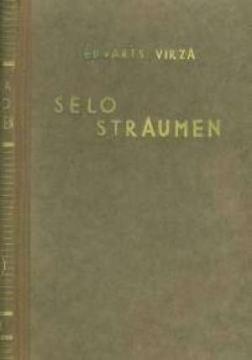
Selo Straumen: kronika lotiškog imanja

Edvarts Virza

In the novel Straumen Village, Edvarts Virza depicts the idealized life of a Latvian village through the cycle of the seasons, emphasizing the collective, tradition, and harmony of man with nature.

Edvarts Virza in his work The Village of Straumen (1933) creates one of the most recognizable works of Latvian interwar literature, which can be understood as a poetic chronicle of idealized rural life.

For the reader unfamiliar with the Latvian literary tradition, it is important to emphasize that Straumēni does not function as a classic novel with a single protagonist and a clear plot line, but as a lyrical-epic depiction of a rural community. The work is often described as a rural epic, because the focus is not on the individual but on the collective – the family and the peasants living in harmony with natural cycles.

The plot is organized around the change of seasons, which determines the rhythm of life: spring brings the beginning of work and renewal, summer an intensive agricultural cycle, autumn the harvest and a sense of fulfillment, and winter a retreat into an enclosed, family space and reflection. This builds the idea of ​​a stable, almost archetypal order in which man, land and tradition are interconnected.

In a broader cultural context, the work was created in a period when Latvian literature strongly affirmed national identity and rural values, often idealizing the village as a bearer of moral and cultural stability. Straumen Village is therefore read not only as a depiction of rural life, but also as a symbolic construction of national space and collective memory.

Stylistically, Virza uses highly stylized, rich and rhythmic language, close to poetry, which gives everyday village chores a monumental, almost mythical dimension. It is this combination of realism of details and idealization that makes the work one of the canonical texts of 20th-century Latvian literature.

Original title
Straumēni
Translation
Ivan Esih
Dimensions
18 x 13 cm
Pages
212
Publisher
Suvremena biblioteka, Zagreb, 1943.
 
Latin alphabet. Hardcover.
Language: Croatian.

One copy is available

Condition:Used, very good condition
Damages or inconvenience notice:
  • Traces of patina
 

Are you interested in another book? You can search the offer using our search engine or browse books by category.

You may also be interested in these titles

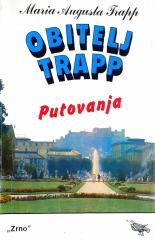
Obitelj Trapp: Putovanja

Obitelj Trapp: Putovanja

Maria Augusta Trapp

An autobiographical sequel to the famous story of the Trapp family after their escape from Nazi Austria. The work describes the hardships and adventures of a family who, guided by faith and music, strive to start a new life in exile.

Kršćanska sadašnjost, 1991.
Croatian. Latin alphabet. Paperback.
8.36
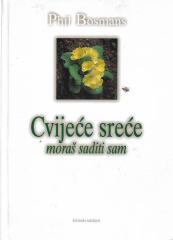
Cvijeće sreće moraš saditi sam

Cvijeće sreće moraš saditi sam

Phil Bosmans

Poetic fragments of a Belgian priest who, with the power of spiritual authority, spread the influence of his interesting movement (Union without names) all over the world.

Kršćanska sadašnjost, 1999.
Croatian. Latin alphabet. Hardcover.
9.38
Razmatranja: drugi svezak

Razmatranja: drugi svezak

Franjo Benešić
Gradska knjižnica i čitaonica, 2009.
Croatian. Latin alphabet. Paperback.
9.54
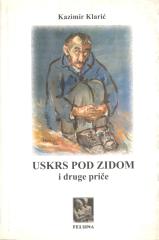
Uskrs pod zidom, i druge priče

Uskrs pod zidom, i druge priče

Kazimir Klarić

"Easter Under the Wall, and Other Stories" is a collection of short stories by author Kazimir Klarić, imbued with a deeply humanistic, Christian and patriotic spirit, with a strong emphasis on moral responsibility, faith, suffering and redemption.

Felsina, 2002.
Croatian. Latin alphabet. Paperback.
3.56
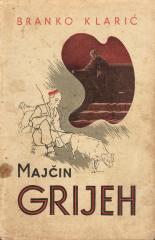
Majčin grijeh

Majčin grijeh

Branko Klarić

A collection of short stories by Branko Klarić, with the title novella Majčin grijeh (Mother's Sin) (1940) and other stories of a moral-spiritual and social character, is the Catholic-intoned prose of the then young teacher, poet and prose writer.

Hrvatsko književno društvo Sv. Jeronima, 1940.
Croatian. Latin alphabet. Paperback.
5.42
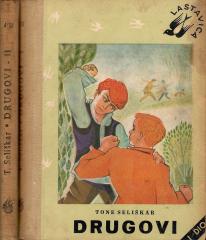
Drugovi I-II

Drugovi I-II

Tone Seliškar

A collection of short stories that follow the lives of young people, mostly pupils and students, during and after World War II, with an emphasis on their ideological struggle, maturation, and development of awareness of social changes.

Veselin Masleša, 1962.
Croatian. Latin alphabet. Hardcover.
The book consists of two volumes
6.32