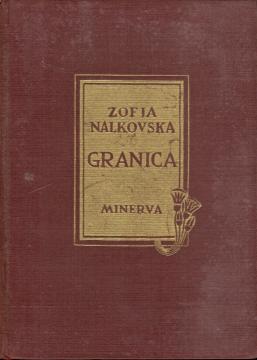
Granica
Rijetka knjiga

Granica

Zofia Nałkowska

Through the fate of the ambitious Zenon Ziembiewicz, the novel Granica depicts the transgression of moral, social and human boundaries – careerism, class differences and the price of compromise in interwar Polish society.

The Border (1935) is one of Zofia Nałkowska’s most significant works and the pinnacle of Polish psychological and social prose of the interwar period. The novel has a complex structure – it begins with the death of the main character Zenon Ziembiewicz, and then his life is reconstructed through retrospection.

Zenon Ziembiewicz, the son of an estate manager, is an ambitious and capable young man who quickly climbs the social ladder – from journalist to mayor. On the way to success, he crosses several “borders”: moral (betrays love and responsibility), class (exploits lower social classes) and human (loses inner purity). The story centers on two female characters: Elżbieta Biecka, a refined and cold member of the upper class, and Justyna Bogutówna, a poor, naive and emotional girl from the people whom Zenon seduces and abandons.

Nałkowska masterfully analyzes the mechanisms of careerism, the hypocrisy of bourgeois society, class divisions and moral relativity. The novel shows how an individual, in his pursuit of success and power, gradually loses the boundaries between good and evil, truth and lies, love and benefit. The criticism of patriarchal society and the fate of women in it is particularly strong.

The style is precise, psychologically deep and analytical, with elements of social satire. Nałkowska does not judge the characters directly, but rather depicts them in all their contradictions, leaving the reader to reflect on the limits of human action.

The Border is considered a classic of 20th-century Polish literature and an important testimony to the moral crisis of European civil society on the eve of World War II.

Prijevod
Duša Perović
Urednik
Tanasije Mladenović, Risto Tošović
Ilustracije
Nada Doroški
Naslovnica
Stevan Vujkov
Dimenzije
20 x 14 cm
Broj strana
306
Nakladnik
Minerva, Subotica, 1956.
 
Latinica. Tvrde korice.
Jezik: Srpski.

Jedan primjerak je u ponudi

Stanje:Korišteno, u vrlo dobrom stanju
Oštećenja / nepogodnosti:
  • Traces of patina
Dodano u košaricu!
 

Zanima Vas i neka druga knjiga? Možete pretražiti našu ponudu pomoću tražilice ili prelistati knjige po kategorijama.

Možda će Vas zanimati i ovi naslovi

Rimske priče: izbor

Rimske priče: izbor

Alberto Moravia

Collections of short stories from Roman life in the post-war era: ordinary people from the people and the petty bourgeoisie – the poor, workers, small craftsmen – face misery, survival, jealousy, petty deceit and moral compromises in everyday life.

Otokar Keršovani, 1966.
Hrvatski. Latinica. Tvrde korice.
3,98
Drugovi I-II

Drugovi I-II

Tone Seliškar

Zbirka kratkih priča koje prate živote mladih, uglavnom đaka i studenata, tokom i nakon Drugog svetskog rata, sa akcentom na njihovu ideološku borbu, sazrevanje i razvijanje svesti o društvenim promenama.

Veselin Masleša, 1962.
Hrvatski. Latinica. Tvrde korice.
Knjiga se sastoji od dva toma
6,32
Hajduk Nikola Šuhaj

Hajduk Nikola Šuhaj

Ivan Olbracht

Hajduk Nikola Šuhaj (1933) je najpoznatiji roman Ivana Olbrahta (pravo ime Kamil Zeman, 1882–1952), klasika češke književnosti 20. veka. Jedno je od najvažnijih dela češke književnosti između dva rata.

Svjetlost, 1965.
Hrvatski. Latinica. Broširano.
4,56
Na posljednjim tračnicama

Na posljednjim tračnicama

August Cesarec

Autobiografska novela u kojoj Cesarec prikazuje svoje iskustvo u zatvoru, naglašavajući psihološke i socijalne aspekte boravka u zatvoru. U noveli je istaknuta snaga duha u borbi protiv nepravde i odanosti svojim idealima – čak i „na poslednjim šinama“.

Mladost, 1963.
Hrvatski. Latinica. Broširano s ovitkom.
3,76
Middlemarch I: Gospođica Brooke

Middlemarch I: Gospođica Brooke

George Eliot

U prvoj knjizi romana upoznajemo Doroteu Bruk, devetnaestogodišnju devojku koja želi sjajan život posvećen dobru. Udaje se za starog naučnika Kazabona, misleći da će joj pomoći u intelektualnom radu, ali brak donosi razočaranje.

Matica hrvatska, 1961.
Hrvatski. Latinica. Tvrde korice s ovitkom.
3,24
Maskarada / Bračna ljubav

Maskarada / Bračna ljubav

Alberto Moravia

In "Masquerade," Moravia satirically depicts fascist Italy through absurd political intrigue and disguise. "Marital Love" intimately explores erotic tension, possessiveness, and emotional alienation in everyday life.

Otokar Keršovani, 1966.
Hrvatski. Latinica. Tvrde korice.
3,22 - 3,86