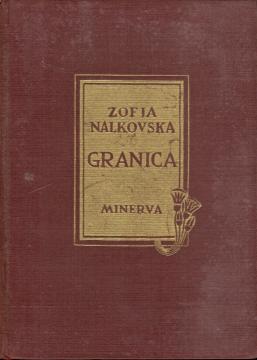
Granica
Through the fate of the ambitious Zenon Ziembiewicz, the novel Granica depicts the transgression of moral, social and human boundaries – careerism, class differences and the price of compromise in interwar Polish society.
The Border (1935) is one of Zofia Nałkowska’s most significant works and the pinnacle of Polish psychological and social prose of the interwar period. The novel has a complex structure – it begins with the death of the main character Zenon Ziembiewicz, and then his life is reconstructed through retrospection.
Zenon Ziembiewicz, the son of an estate manager, is an ambitious and capable young man who quickly climbs the social ladder – from journalist to mayor. On the way to success, he crosses several “borders”: moral (betrays love and responsibility), class (exploits lower social classes) and human (loses inner purity). The story centers on two female characters: Elżbieta Biecka, a refined and cold member of the upper class, and Justyna Bogutówna, a poor, naive and emotional girl from the people whom Zenon seduces and abandons.
Nałkowska masterfully analyzes the mechanisms of careerism, the hypocrisy of bourgeois society, class divisions and moral relativity. The novel shows how an individual, in his pursuit of success and power, gradually loses the boundaries between good and evil, truth and lies, love and benefit. The criticism of patriarchal society and the fate of women in it is particularly strong.
The style is precise, psychologically deep and analytical, with elements of social satire. Nałkowska does not judge the characters directly, but rather depicts them in all their contradictions, leaving the reader to reflect on the limits of human action.
The Border is considered a classic of 20th-century Polish literature and an important testimony to the moral crisis of European civil society on the eve of World War II.
One copy is available
- Traces of patina