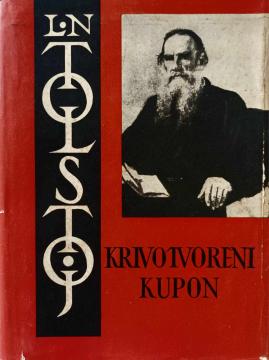
Izabrana djela 12: Krivotvoreni kupon i druge pripovijesti
The stories Morning of a Nobleman, From the Notes of Prince Nekhludov, Marker's Notes, The Scale, Two Hussars, The Prisoner of the Caucasus, The Forged Coupon, The Death Notes of Old Man Fyodor Kuzmich, and Why? explore themes of morality, society, and sp
Morning of a Landlord (1856): Young Prince Nekhludoff attempts to reform the lives of the peasants on his estate, but encounters resistance from them and his own illusions. The story reveals the gap between idealism and reality, reflecting Tolstoy's early critique of social inequalities.
From the Notes of Prince Nekhludoff (1856): Nekhludoff, while staying in Lucerne, witnesses the injustice of a poor musician. This episode leads him to reflect on the hypocrisy of the aristocracy and moral duty, foreshadowing Tolstoy's later social critique.
Marker's Notes (1857): The story follows the life of a gambler who records his experiences, revealing the destructive power of passion. Tolstoy explores moral decay through an introspective account, reflecting his fascination with psychology.
The Pay Scale (1887): The peasant Ivan, faced with hard work, discovers spiritual strength in simplicity. The story celebrates modesty and work, reflecting Tolstoy's late philosophy of simple living and Christian morality.
The Two Hussars (1856): Two officers, father and son, are compared through their behavior. The older hussar is charming but immoral; the younger one strives to be honorable. The novella contrasts a romanticized past with a moral conscience, demonstrating Tolstoy's early realism.
The Caucasian Prisoner (1872): A Russian officer, Zhilin, is captured in the Caucasus and escapes with the help of a local girl. The story, inspired by Tolstoy's experiences, celebrates courage and humanity across cultural boundaries, with an emphasis on simple narrative.
The Counterfeit Coupon (1904): Counterfeit money sets in motion a chain of immorality and suffering, but also redemption. The posthumous novella explores the consequences of sin and the possibility of spiritual renewal, reflecting Tolstoy's late moral vision.
The Posthumous Notes of Elder Fyodor Kuzmich (1905): An old man, perhaps Tsar Alexander I in disguise, lives an ascetic life, seeking spiritual peace. The story speculates on the rejection of power for the sake of the soul, reflecting Tolstoy's ideal of Christian modesty.
Why? (1906): A Polish revolutionary fights against imperial repression, but loses his family and ideals. The novella criticizes violence and suffering, reflecting Tolstoy's pacifism and compassion for the oppressed.
These short stories show the development of Tolstoy's style, from early realism (Two Hussars, Morning of a Gentleman) to late moral parables (The Counterfeit Coupon, The Scale). Inspired by his experiences in the Caucasus and his spiritual transformation, they anticipate the themes of War and Peace and Resurrection. While the early stories explore society and psychology, the later ones emphasize Christian morality and the rejection of materialism, making them crucial to understanding his philosophical evolution.
Early novels such as The Prisoner of the Caucasus were praised for their liveliness, while later ones (The Counterfeit Coupon, Why?) were controversial for their radical views. Critics appreciated the style, but some considered the later works didactic. Today they are regarded as gems of Tolstoy's versatile genius.
Jedan primerak je u ponudi
- The cover is missing