Prva hrvatska glagoljska početnica: pretisak Početnice iz 1527
Retka knjiga

Prva hrvatska glagoljska početnica: pretisak Početnice iz 1527

The oldest preserved Croatian primer and a significant monument of Croatian Glagolitic heritage, printed in Venice by Andrija Torresani. Facsimile reprint from 1983, with transliteration and afterword by Josip Bratulić.

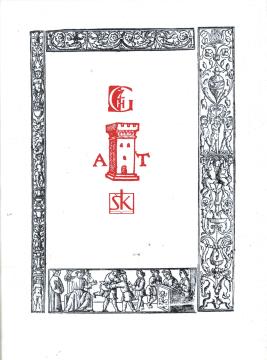
The book has six leaves (11 pages) and is richly illustrated with 20 woodcuts that mark the sections, including a depiction of the twelve apostles. The language is Old Church Slavonic of the Croatian redaction, while the closing prayers are in the Čakavian, a vernacular language, intended for personal devotion, such as prayers at meals.

The content of the primer follows the model of the Latin primers: after the pious invocation, the Glagolitic letters are in a row, followed by the Angelic Salutation (Hail Mary), the Lord's Prayer, the five Psalms of David (109–113), the Magnificat, the Song of Simeon, and the Apostle's Creed with a mixed order of the articles of faith. The closing prayers have an apocryphal character, as Bratulić states. The aim of the reprint is to preserve the reading of the Glagolitic script among pupils, students, and lovers of Croatian culture, thus preserving the testimony of the people's ups and downs.

The Torresania printing house, known for the Baromić Breviary (1493), played a key role in Croatian printing. The primer from 1527 precedes larger works, such as the Missal of Pavle Modrušanin (1528). The National and University Library purchased the original copy from a Munich antiquarian, making this reprint possible. Bratulić's afterword emphasizes the importance of the Glagolitic script as a symbol of Croatian literacy and cultural identity.

Urednik
Josip Bratulić
Dimenzije
24 x 18 cm
Broj strana
34
Izdavač
Školska knjiga, Zagreb, 1983.
 
Tiraž: 1.500 primeraka
 
Latinica. Broširano.
Jezik: Hrvatski.

Jedan primerak je u ponudi

The book was printed in 1670 numbered copies. 1500 copies were printed on grammage paper and numbered from 171 to 1670. This copy is numbered 192.
Stanje:Korišćeno, u odličnom stanju
Dodato u korpu!
 

Zanima Vas i neka druga knjiga? Možete pretražiti našu ponudu pomoću pretrage ili prelistati knjige po kategorijama.

Možda će Vas zanimati i ovi naslovi

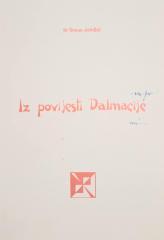
Iz povijesti Dalmacije

Iz povijesti Dalmacije

Šimun Jurišić

Fashion and customs, institutions and societies, Split theater, carnivals, Trogir and something about Trogir.

Vlastita naklada, 1984.
Hrvatski. Latinica. Broširano.
4,62
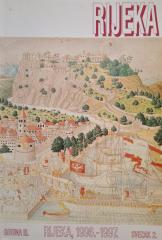
Numizmatička povijest Rijeke

Numizmatička povijest Rijeke

Bože Mimica

This book covers the coins that circulated in the Rijeka area over a period of twenty-five centuries. Each period, from antiquity to 1918, is accompanied by a brief historical overview of Rijeka.

Povijesno društvo, 1997.
Hrvatski. Latinica. Broširano.
17,9814,38
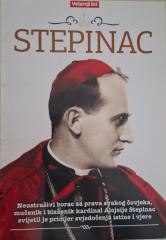
Stepinac

Stepinac

Zvonimir Despot, Jadranka Jureško-Kero, Darko Pavičić, Ljiljana Risek, Silvije Tomašević
Večernji list, 2012.
Hrvatski. Latinica. Broširano.
8,56 - 9,38
Tuđman i budućnost Hrvatske

Tuđman i budućnost Hrvatske

Thomas Patrick Melady

The book by a former American diplomat is a documentary and memoir about Franja Tuđman. The author investigates the Croatian country and people, and the role of Tuđman as a dominant personality in the birth of a new state.

Hrvatska sveučilišna naklada, 2003.
Hrvatski. Latinica. Broširano.
8,26
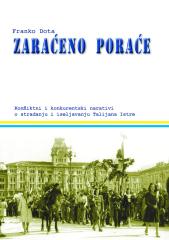
Zaraćeno poraće: Konfliktni i konkurentski narativi o stradanju i iseljavanju Talijana Istre

Zaraćeno poraće: Konfliktni i konkurentski narativi o stradanju i iseljavanju Talijana Istre

Franko Dota

The book analyzes how conflicting historical narratives about the suffering and mass emigration of Italians from Istria and Rijeka developed in Croatia and Italy after World War II (1943–1956), debunking myths and encouraging an empathetic approach to the

Srednja Europa, 2010.
Hrvatski. Latinica. Broširano.
11,32
Demografski kontekst i sociokulturne posljedice hrvatskoga domovinskog rata

Demografski kontekst i sociokulturne posljedice hrvatskoga domovinskog rata

The authors pointed out the demographic situation in Croatia in the late 1980s and early 1990s, the demographic trends in the war-affected areas of Croatia, the demographic war losses and the long-term demographic consequences of the war.

Institut društvenih znanosti - "Ivo Pilar", 2009.
Hrvatski. Latinica. Broširano.
10,98