Izvješća iz Tarahumare

Izvješća iz Tarahumare

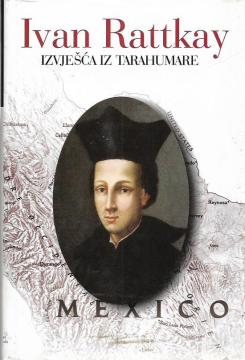
Ivan Rattkay

The book contains three Latin reports by the Croatian Jesuit, nobleman and explorer Ivan Rattkay (Ratkaj, 1647–1683), born in Ptuj (today Slovenia), sent to the provincial of the Austro-Czech Jesuit province from the mission in northern Mexico.

Rattkay, a trained mathematician and philosopher, abandoned his academic career and went to the New World in 1678. After traveling across the Atlantic and Mexico, he arrived in the Tarahumara region (present-day Chihuahua) in 1680, where he worked as a missionary among the Tarahumara Indians (Rarámuri) until his death in 1683 at the Jesús Carichic mission (probably poisoned).

The first report describes the long journey: from Europe across the Atlantic, Vera Cruz, Mexico to the northern missions – with accounts of shipwrecks, Spanish colonial rule and dangers.

The second and third (most important) reports describe in detail the geography of the Tarahumara: the Sierra Madre Occidental mountains, canyons (barrancas), rivers, climate, mineral resources (silver), fauna and flora. Rattkay was the first European to accurately map the region – his map from 1683 indicates missions, Spanish forts and Indian settlements.

The most valuable ethnographic parts are: a description of the Tarahumara – their physical endurance (famous ultramarathoners), clothing, houses (caves and huts), customs, dances, rituals (with peyote and alcohol), family life, warfare, beliefs (a mixture of animism and Christianity), language and social structure. Rattkay portrays them as gentle, hospitable, but also stubborn towards Christianization – he criticizes the Spanish colonists for exploitation and violence.

The reports are written in a baroque style: objective, scientific, with missionary zeal, but also realistic reviews of the difficulties of the mission (diseases, rebellions, isolation). Rattkay dies young (36 years old), probably as a victim of a conspiracy against the missionaries.

The book (with an introductory study by Mija Korade) is an important source for the history of Mexico, the ethnology of the Tarahumara and Croatian contributions to the exploration of the New World – the first detailed European description of this people and region.

Prevod
Mijo Korade
Urednik
Bojan Marotti
Naslovnica
Ivica Belinić
Dimenzije
21 x 14 cm
Broj strana
312
Izdavač
ArTresor naklada, Zagreb, 1998.
 
Latinica. Tvrde korice s omotom.
Jezik: Hrvatski.

Jedan primerak je u ponudi

Stanje:Korišćeno, u odličnom stanju
Dodato u korpu!
 

Zanima Vas i neka druga knjiga? Možete pretražiti našu ponudu pomoću pretrage ili prelistati knjige po kategorijama.

Možda će Vas zanimati i ovi naslovi

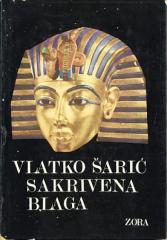
Sakrivena blaga

Sakrivena blaga

Vlatko Šarić

True and fictional legends about buried treasure have lived since ancient times in naive folk tales and in documents and books of all civilizations.

Zora, 1969.
Hrvatski. Latinica. Tvrde korice s omotom.
6,22
Povijest otkrića i istraživanja 1: Početak istraživanja

Povijest otkrića i istraživanja 1: Početak istraživanja

Felix Barker, Malcolm Ross-Macdonald, Duncan Castlereagh

Knjiga opisuje čovjekova otkrića dijelova planete Zemlje koja su bila slučajna ili planirana. Opisano je razdoblje od prije 50 tisuća godina do današnjih napora koji se ulažu u istraživanje svemira.

Mladinska knjiga, 1976.
Hrvatski. Latinica. Tvrde korice.
37,26 (komplet)
Peta strana svijeta

Peta strana svijeta

Jasen Boko

Jasen Boko kroz putopis i osobnu ispovijest opisuje Južnu Ameriku – kontinent kontrasta, strasti i nemira. Spajajući povijest, kulturu i osobna promišljanja, traži što znači biti „kod kuće“ u svijetu.

V.B.Z, 2006.
Hrvatski. Latinica. Broširano.
11,2210,10
Od Pola do Malnara: Putnici i istraživači u hrvatskoj kulturi od 13. do 20. stoljeća

Od Pola do Malnara: Putnici i istraživači u hrvatskoj kulturi od 13. do 20. stoljeća

Juraj Bubalo

Das Buch des Zagreber Reiseschriftstellers und Professors Juraj Bubalo ist eine Art Enzyklopädie kroatischer Reisender und Entdecker. Als einzigartiges Werk im kroatischen Sachbuchbereich popularisiert es die Entdeckerkultur und erinnert uns daran, dass K

Meridijani, 2024.
Hrvatski. Latinica. Tvrde korice.
28,32
Pretapanja: Pannonius-Vrančić

Pretapanja: Pannonius-Vrančić

Helena Sablić Tomić

Das Buch untersucht, wie verschiedene Kulturen und Traditionen im Laufe der Geschichte miteinander verflochten sind und sich gegenseitig beeinflussen. Darüber hinaus berührt das Buch die Themen Identität, Migration und Transformation von Gesellschaften.

Oksimoron, 2010.
Hrvatski. Latinica. Tvrde korice.
14,62