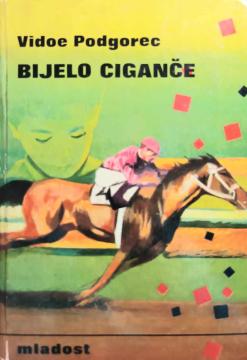
Bijelo ciganče

Bijelo ciganče

Vidoe Podgorec

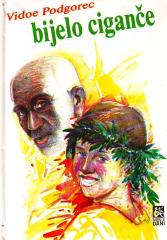
The story of a boy named Tarun, who lost his parents during the war after they were killed by the Nazis. He was left by the side of the road, where he was found by wandering Roma who decided to adopt him. Because of his fair skin, they called him "White G

Tarun grows up in a Roma tent, accepting their way of life, customs and values. His adoptive father, Papa Mulon, was a man of a noble heart and became like a father to him. However, he is not accepted by all members of the community; Henza, Mulon's wife, shows hostility towards him, considering him a burden.

Despite the challenges, Tarun develops a strong bond with the horse Bresko, whom he raised after the death of his mare. Their friendship symbolizes Tarun's ability to find love and belonging in a world that often rejects him.

The novel explores themes of identity, belonging, tolerance and growing up. Through Tarun's story, the author shows how love and acceptance can overcome prejudice and hostility.

Naslov izvornika
Beloto ciganče
Prijevod
Marija Peakić-Mikuljan
Urednik
Alojz Majetić
Ilustracije
Josip Vaništa
Naslovnica
Josip Josipov
Dimenzije
20 x 14 cm
Broj strana
295
Nakladnik
Mladost, Zagreb, 1987.
 
Latinica. Broširano.
Jezik: Hrvatski.

Više primjeraka je u ponudi

Primjerak broj 1

Stanje:Korišteno, u odličnom stanju
Dodano u košaricu!

Primjerak broj 2

Stanje:Korišteno, u vrlo dobrom stanju
Oštećenja / nepogodnosti:
  • Das Vorderblatt fehlt
Dodano u košaricu!

Primjerak broj 3

Stanje:Korišteno, u dobrom stanju (tragovi korištenja)
Oštećenja / nepogodnosti:
  • Damaged back
Dodano u košaricu!
 

Zanima Vas i neka druga knjiga? Možete pretražiti našu ponudu pomoću tražilice ili prelistati knjige po kategorijama.

Možda će Vas zanimati i ovi naslovi

Bijelo ciganče

Bijelo ciganče

Vidoe Podgorec

The story of a boy named Tarun, who lost his parents during the war after they were killed by the Nazis. He was left by the side of the road, where he was found by wandering Roma who decided to adopt him. Because of his fair skin, they called him "White G

Svjetlost, 1989.
Hrvatski. Latinica. Tvrde korice.
4,36
Magična ljubavna kutijica

Magična ljubavna kutijica

Santa Montefiore

The Magic Love Box (2002) follows the life story of Federica Campione, which begins in Vina del Mar, Chile, in the summer of 1982. Montefiore creates an epic story of growth, where the magic is not only in the box, but in the courage to let go of the past

Mozaik knjiga, 2006.
Hrvatski. Latinica. Tvrde korice.
7,34
Usta puna zemlje

Usta puna zemlje

Branimir Šćepanović

The novel "Usta puna zemlje" (1970), the masterpiece of the Serbian writer Branimir Šćepanović, is a psychologically in-depth explorer of the limits of the human soul, solitude and existential freedom, reminiscent of Kafka and Camus.

BIGZ, 1987.
Srpski. Latinica. Broširano.
3,98
Tri mušketira 1-2

Tri mušketira 1-2

Alexandre Dumas

Dumas' version of the story depicts the adventures of d'Artagnan and his friends from 1625 to 1628.

Epoha, 1966.
Hrvatski. Latinica. Tvrde korice s ovitkom.
Knjiga se sastoji od dva toma
9,48
Deobe 1-3

Deobe 1-3

Dobrica Ćosić

This work, awarded the NIN Prize for that year, is considered one of the most significant in Serbian literature after World War II.

Prosveta, 1961.
Srpski. Ćirilica. Tvrde korice s ovitkom.
Knjiga se sastoji od tri toma
11,42
Krčma

Krčma

Julian Stryjkowski

The book "Inn" by Julian Stryjkowski, published in 1977, explores life in a small Jewish village in Galicia during the 19th century.

BIGZ, 1977.
Srpski. Latinica. Broširano.
4,38