Po-etika, knjiga druga
Retka knjiga

Po-etika, knjiga druga

Danilo Kiš

A collection of interviews that complements the first book of essays from 1972. As a lecturer in Serbo-Croatian at the University of Bordeaux, Kiš reveals in conversations the core of his "po-ethics" - a morally and aesthetically charged vision of literat

Quote from the book: "art is... still the last instance, the last refuge of the human spirit. When everyone roars with their pig hearts, the last ones who will still see with human eyes and feel with a human heart will be those who were no stranger to the experience of art."

Born in Subotica in 1935 in a mixed Jewish-Montenegrin family, Kiš lost his father Eduard in Auschwitz in 1944, which profoundly shaped his worldview: themes of death, trauma, identity and history permeate his oeuvre, from "Sandman" (1972) to "Tomb for Boris Davidovič" (1976). In interviews, inspired by Nabokov and the Russian formalists (Shklovsky, Eichenbaum), he advocates palimpsest – layered erasure and rewriting of the text to an absolute, albeit elusive principle. He criticizes "autopastiche" (self-return) and generalizing criticism, preferring fragmentation, irony and depersonalization to lyrical sentimentalism or ideological programs. His poetics is "unhappy and resigned": unhappy with the inconsistency of demands, resigned to their unattainability, but persistent in the face of biographical "capture" (Sartre) and anxiety before death.

The book contains discussions on influences (Prust, Andrić), literary form (from first to third person, fragments in "Peščanik" with 67 parts), politics (rejection of socialist realism, fight against injustice without ideology) and existential questions. Later, parts were included in "Homo poeticus" (1983), Kiš's selection of essays and interviews, while the whole was published posthumously in "Skladište" (1995). As a symbol of intellectual resistance, "Po-Ethics" influenced European literature, translated into numerous languages, emphasizing literature as a question, not an answer – in a world where history devours the individual. Kiš, who died in 1989 in Paris, remains a voice opposed to oblivion: "Counting is a talisman against death."

Naslovnica
Nenad Čonkić
Dimenzije
16,5 x 10 cm
Broj strana
188
Izdavač
Ideje, Beograd, 1974.
 
Latinica. Broširano.
Jezik: Srpski.

Jedan primerak je u ponudi

Stanje:Korišćeno, u odličnom stanju
Dodato u korpu!
 

Zanima Vas i neka druga knjiga? Možete pretražiti našu ponudu pomoću pretrage ili prelistati knjige po kategorijama.

Možda će Vas zanimati i ovi naslovi

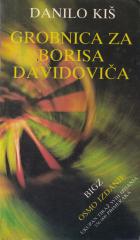
Grobnica za Borisa Davidoviča

Grobnica za Borisa Davidoviča

Danilo Kiš

Today, some fifty years after the first printing, A Tomb for Boris Davidovich is considered one of the best prose books published in the former Yugoslavia, and it has become part of the world literary canon.

BIGZ, 1989.
Srpski. Latinica. Broširano.
7,32
Grobnica za Borisa Davidoviča

Grobnica za Borisa Davidoviča

Danilo Kiš

This collection of seven interconnected stories deals with the victims of Stalinist purges and 20th-century political ideologies, blending historical facts, fiction, and a documentary style.

BIGZ, 1980.
Srpski. Latinica. Broširano.
9,22
Putopisi i studije 2: Putovanja / Sjećanja / Pogledi

Putopisi i studije 2: Putovanja / Sjećanja / Pogledi

Miroslav Krleža

Krleža's second travel collection, in which essays on Russian topics are joined by the text About Lenin, and a group of travel texts which, along with Letter from Koprivnica and Letimo nad Pannonia, also includes the Three Viennese Letters.

NIŠRO Oslobođenje, 1985.
Hrvatski. Latinica. Tvrde korice.
7,82
Putopisi i studije 5: Dijalozi i ideje

Putopisi i studije 5: Dijalozi i ideje

Miroslav Krleža

This volume contains Krleža's notes and notes on some philosophical and worldview topics, under the chapters Marginalia and Conversations.

NIŠRO Oslobođenje, 1985.
Hrvatski. Latinica. Tvrde korice.
9,46
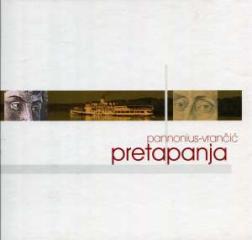
Pretapanja: Pannonius-Vrančić

Pretapanja: Pannonius-Vrančić

Helena Sablić Tomić

The book explores how different cultures and traditions intertwine and influence each other throughout history. Also, the book touches on the topics of identity, migration and transformation of societies.

Oksimoron, 2010.
Hrvatski. Latinica. Tvrde korice.
14,62
Život Betovenov

Život Betovenov

Romain Rolland

The translation of this book was originally published in 1923 by the Belgrade bookseller S. B. Cvijanović, but the entire edition was confiscated and destroyed by the Germans during the Second World War.

Matica srpska, 1947.
Hrvatski. Latinica. Broširano.
5,24