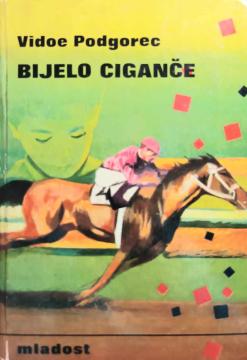
Bijelo ciganče

Bijelo ciganče

Vidoe Podgorec

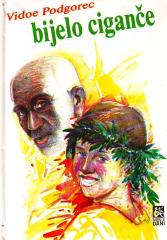
The story of a boy named Tarun, who lost his parents during the war after they were killed by the Nazis. He was left by the side of the road, where he was found by wandering Roma who decided to adopt him. Because of his fair skin, they called him "White G

Tarun grows up in a Roma tent, accepting their way of life, customs and values. His adoptive father, Papa Mulon, was a man of a noble heart and became like a father to him. However, he is not accepted by all members of the community; Henza, Mulon's wife, shows hostility towards him, considering him a burden.

Despite the challenges, Tarun develops a strong bond with the horse Bresko, whom he raised after the death of his mare. Their friendship symbolizes Tarun's ability to find love and belonging in a world that often rejects him.

The novel explores themes of identity, belonging, tolerance and growing up. Through Tarun's story, the author shows how love and acceptance can overcome prejudice and hostility.

Naslov izvornika
Beloto ciganče
Prijevod
Marija Peakić-Mikuljan
Urednik
Alojz Majetić
Ilustracije
Josip Vaništa
Naslovnica
Josip Josipov
Dimenzije
20 x 14 cm
Broj strana
295
Nakladnik
Mladost, Zagreb, 1987.
 
Latinica. Broširano.
Jezik: Hrvatski.

Više primjeraka je u ponudi

Primjerak broj 1

Stanje:Korišteno, u odličnom stanju
Dodano u košaricu!

Primjerak broj 2

Stanje:Korišteno, u vrlo dobrom stanju
Oštećenja / nepogodnosti:
  • The front sheet is missing
Dodano u košaricu!

Primjerak broj 3

Stanje:Korišteno, u dobrom stanju (tragovi korištenja)
Oštećenja / nepogodnosti:
  • Damaged back
Dodano u košaricu!
 

Zanima Vas i neka druga knjiga? Možete pretražiti našu ponudu pomoću tražilice ili prelistati knjige po kategorijama.

Možda će Vas zanimati i ovi naslovi

Bijelo ciganče

Bijelo ciganče

Vidoe Podgorec

Priča o dječaku Tarunu, koji je tijekom rata ostao bez roditelja nakon što su ih ubili nacisti. Ostavili su ga pored ceste, gdje su ga pronašli Romi lutalice i odlučili ga usvojiti. Zbog njegove svijetle puti, nazvali su ga "Bijelo ciganče".

Svjetlost, 1989.
Hrvatski. Latinica. Tvrde korice.
4,36
Zagrepčanka

Zagrepčanka

Branislav Glumac

Branislav Glumac veröffentlichte 1974 einen Roman ohne Punkte und Kommas, den unerbittlichen Gedankenstrom eines jungen Rebellen. Das im sozialistischen Jugoslawien erschienene Werk löste mit seiner Offenheit einen Skandal aus und wurde zu einem Klassiker

IROS, 1986.
Hrvatski. Latinica. Tvrde korice.
8,22 - 8,24
Deobe 1-3

Deobe 1-3

Dobrica Ćosić

Dieses Werk, das in diesem Jahr mit dem NIN-Preis ausgezeichnet wurde, gilt als eines der bedeutendsten der serbischen Literatur nach dem Zweiten Weltkrieg.

Prosveta, 1961.
Srpski. Ćirilica. Tvrde korice s ovitkom.
Knjiga se sastoji od tri toma
11,42
Kreutzerova sonata, Hadži-Murat

Kreutzerova sonata, Hadži-Murat

Lav Nikolajevič Tolstoj

Kreutzers Sonate gehört zu jenen Werken Tolstois, die der Schriftsteller in vielerlei Hinsicht seiner Ansicht über moralische Fragen, vor allem über die eheliche Moral, anpasste.

Civitas, 2004.
Hrvatski. Latinica. Broširano.
4,98
Pustolovine Toma Sawyera

Pustolovine Toma Sawyera

Mark Twain

Die Abenteuer des Tom Sawyer sind der erste wirklich realistische Kinderroman, nicht nur in der amerikanischen, sondern auch in der weltweiten Kinderliteratur. Twains berühmtestes Werk und ein beliebtes Kinderbuch, in dem der Autor seine Kindheitserlebnis

Nakladni zavod Hrvatske, 1947.
Hrvatski. Latinica. Tvrde korice.
16,32
Krčma

Krčma

Julian Stryjkowski

Das 1977 erschienene Buch „Inn“ von Julian Stryjkowski untersucht das Leben in einem kleinen jüdischen Dorf in Galizien im 19. Jahrhundert.

BIGZ, 1977.
Srpski. Latinica. Broširano.
4,38