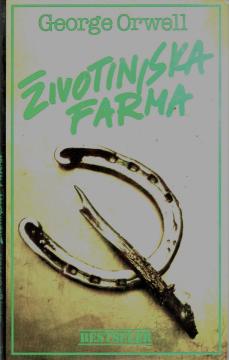
Životinjska farma
„Animal Farm“ ist ein kurzer, satirischer Dystopie-Roman des britischen Schriftstellers George Orwell (Eric Arthur Blair) und eines der einflussreichsten Werke des 20. Jahrhunderts. Orwell nutzt einen einfachen, märchenhaften Stil, um Totalitarismus und K
In George Orwells allegorischem Roman Animal Farm (1945) rebellieren die Tiere auf der Manor Farm gegen den Menschen und vertreiben Bauer Jones. Sie errichten eine Gesellschaft unter dem Motto „Alle Tiere sind gleich“. Schwein Napoleon übernimmt die Macht, ändert die Regeln und verwandelt die Farm in eine Diktatur, in der „alle Tiere gleich sind, aber manche gleicher als andere“.
Die Handlung ist eine Allegorie auf die Oktoberrevolution und den Aufstieg des Stalinismus in der UdSSR. Die Tiere der englischen Farm Manor Farm, angeführt von der alten Sau Major (Symbol für Marx/Lenin), rebellieren gegen den grausamen Bauer Jones (Zarismus). Nach der Revolution wird die Farm zur Animal Farm, und die sieben Gebote des Animalismus („Alle Tiere sind gleich“, „Alles, was auf zwei Beinen geht, ist der Feind“ usw.) bilden die Grundlage der neuen Gesellschaft.
Zwei Fohlen – Schneeball (Trotzki) und Napoleon (Stalin) – kämpfen um die Führung. Napoleon vertreibt Schneeball mithilfe von Hunden (der Geheimpolizei) und reißt die absolute Macht an sich. Er ändert nach und nach die Anordnungen (z. B. „Tiere dürfen nicht im Bett schlafen“ → „keine Laken“), lebt im Luxus, treibt Handel mit Menschen und verrät die Ideale der Revolution vollständig. In der Schlussszene unterscheiden die Tiere nicht mehr zwischen Schweinen und Menschen – die Diktatur ist vollendet.
Das Buch wurde aufgrund seiner Kritik an der UdSSR während des Zweiten Weltkriegs von mehreren Verlagen abgelehnt, avancierte aber dennoch zu einem Klassiker der antistalinistischen Literatur. Es erfreute sich im Nachkriegsjugoslawien großer Beliebtheit und wurde oft als Kritik am Stalinismus und am bürokratischen Sozialismus interpretiert. Heute wird es als universelle Parabel über Macht, Propaganda und den Verrat an Idealen gelesen. Es zählt neben 1984 zu den wichtigsten Werken der politischen Satire.
Angeboten wird ein Exemplar