Životinjska farma
Rare book

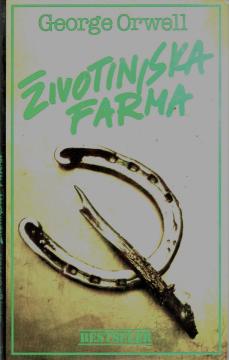
Životinjska farma

George Orwell

"Animal Farm" is a short satirical dystopian novel by British writer George Orwell (Eric Arthur Blair), one of the most influential works of the 20th century. Orwell uses a simple, fairy-tale style to criticize totalitarianism and government corruption.

In George Orwell's allegorical novel Animal Farm (1945), the animals at Manor Farm revolt against man and drive out Farmer Jones. They establish an equal society under the motto "All animals are equal". Pig Napoleon takes over, changes the rules and turns the farm into a dictatorship, where "All animals are equal, but some are more equal".

The plot is an allegory of the October Revolution and the rise of Stalinism in the USSR. The animals on the English farm Manor Farm, led by the old sow Major (symbol of Marx/Lenin), rebel against the cruel farmer Jones (Czarism). After the revolution, the farm becomes the Animal Farm, and the seven commandments of Animalism ("All animals are equal", "Whatever walks on two legs is the enemy", etc.) become the basis of the new society.

Two fillies – Snowball (Trotsky) and Napoleon (Stalin) – are fighting for leadership. Napoleon, with the help of dogs (secret police), expels Snowball and takes absolute power. He gradually changes the orders (e.g. "Animals are not allowed to sleep in bed" → "no sheets"), lives luxuriously, trades with people and completely betrays the ideals of the revolution. In the final scene, the animals no longer distinguish pigs from humans - the dictatorship is complete.

The book was rejected by several publishers due to its criticism of the USSR during World War II, but it became a classic of anti-Stalinist literature. It was popular in post-war Yugoslavia, often interpreted as a criticism of Stalinism and bureaucratic socialism. Today it is read as a universal parable about power, propaganda and the betrayal of idealism. One of the most important works of political satire, along with 1984.

Original title
Animal Farm: A Fairy Story
Translation
Vladimir Roksandić
Editor
Zdravko Židovec
Graphics design
Nenad Dogan
Dimensions
19 x 12 cm
Pages
109
Publisher
August Cesarec, Zagreb, 1985.
 
Latin alphabet. Hardcover with dust jacket.
Language: Croatian.

One copy is available

Condition:Used, excellent condition
 

Are you interested in another book? You can search the offer using our search engine or browse books by category.

You may also be interested in these titles

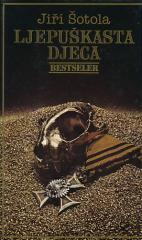
Ljepuškasta djeca

Ljepuškasta djeca

Jiří Šotola

The novel Beautiful Children depicts the world of adolescent rebels in a "re-education" colony - a prison disguised as a school. Written in the spirit of the Prague Spring, the work criticizes the communist system through a dynamic, cinematic narrative.

August Cesarec, 1986.
Croatian. Latin alphabet. Hardcover with dust jacket.
4.82 - 4.84
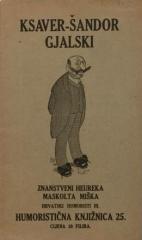
Znanstveni heureka Maskolta Miška

Znanstveni heureka Maskolta Miška

Ksaver Šandor Gjalski
Humoristična knjižnica, 1911.
Croatian. Latin alphabet. Paperback.
7.36
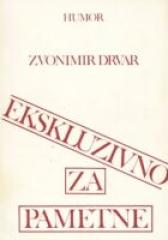
Ekskluzivno za pametne – humor

Ekskluzivno za pametne – humor

Zvonimir Drvar
Zvonimir Drvar, 1975.
Croatian. Latin alphabet. Hardcover.
3.99
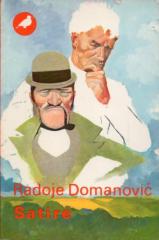
Satire

Satire

Radoje Domanović
Zora, 1968.
Serbian. Latin alphabet. Paperback.
2.74
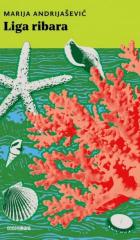
Liga ribara

Liga ribara

Marija Andrijašević

The League of Fishermen brings together everything that makes us read Marija Andrijašević: complex characters, flexible and sumptuous language, convincing dialogues and stories that will hook you with discreet humor.

Oceanmore, 2024.
Croatian. Latin alphabet. Paperback.
11.98
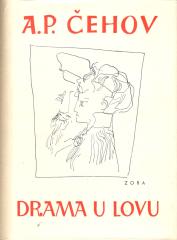
Sabrana djela A. P. Čehova #3: Drama u lovu i druge novele

Sabrana djela A. P. Čehova #3: Drama u lovu i druge novele

Anton Pavlovič Čehov

The third volume of Collected Works contains Chekhov's most extensive novella, "A Drama in Hunting," as well as a number of longer stories from the period 1885-1886. There are humoresques such as Silo in a Bag, Eh, That Audience, and A Lot of Paper, as we

Zora, 1959.
Croatian. Latin alphabet. Hardcover with dust jacket.
8.74