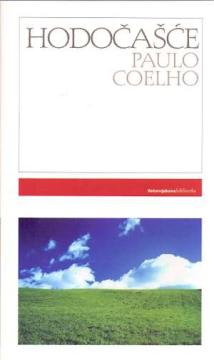
Hodočašće

Hodočašće

Paulo Coelho

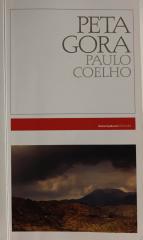
A romanticized account of the author's pilgrimage to Santiago de Compostela in 1986. This experience of one of the three sacred paths of antiquity became a true initiation for him and changed him forever.

For his first book, Coelho explicitly states that it is not a guide to the Way of Santiago, but rather a story about his experience on that pilgrimage. The book is dominated by elements of travelogue prose, with descriptions of landscapes and settlements, a series of historical and literary reminiscences, narrated legends and miraculous stories, and in the foreground is the narrator's rediscovery of faith, "a value that surpasses any other belief". This happens gradually, in a constant dialogue with the guide Petrus, in the spiritual exercises that he suggests to him, and in noticing his own mistakes. On that pilgrimage, Coelho realized that "the search for happiness is a personal matter, not a model that we can give to others", and that this experience does not belong only to saints and prophets, but also to ordinary people.

Two details regarding Coelho's pilgrimage are particularly interesting. On his honeymoon with his second wife in Europe in the early 1980s, he visited Dachau, among other places, where he had a vision in which a man appeared to him. He met the same man some time later in Amsterdam, and he suggested that he return to Catholicism and make a pilgrimage to Santiago (Coelho had previously had various spiritual experiences, from hippie to black magic). During the pilgrimage itself, the strongest impression on him was made by Mount Cebrerio, which is described in the last chapter of the book, and so strong that in his will he expressed the wish that his ashes be scattered there.

Titel des Originals
O Diário de um Mago
Übersetzung
Tanja Tarbuk
Maße
20,5 x 12,5 cm
Seitenzahl
206
Verlag
Večernji list, Zagreb, 2005.
 
Latein Schrift. Taschenbuch.
Sprache: Kroatisch.
ISBN
978-9-53716-159-0

Es werden zwei Exemplare angeboten
Kopiennummer 1

Zustand:Gebraucht, in ausgezeichnetem Zustand
Zum Warenkorb hinzugefügt!

Kopiennummer 2

Zustand:Gebraucht, in ausgezeichnetem Zustand
Zum Warenkorb hinzugefügt!
 

Interessieren Sie sich für ein anderes Buch? Sie können das Angebot über unsere Suchmaschine suchen und finden oder Bücher nach Kategorien durchsuchen.

Diese Titel könnten Sie auch interessieren

Peta gora

Peta gora

Paulo Coelho
Večernji list, 2005.
Kroatisch. Latein Schrift. Taschenbuch.
6,24
Peta gora

Peta gora

Paulo Coelho
V.B.Z, 1998.
Kroatisch. Latein Schrift. Taschenbuch.
7,325,86
Pariški maraton : Knjiga pisanja (Pariz21. i 22. oktobar 2023)

Pariški maraton : Knjiga pisanja (Pariz21. i 22. oktobar 2023)

Ende der achtziger Jahre reiste Damir Uzunović nach Paris und blieb dort weniger als ein Jahr. Er war damals zwanzig Jahre alt, und diese Zeit im Exil sollte prägend für sein späteres literarisches Schaffen sein.

Buybook, 2024.
Kroatisch. Latein Schrift. Hardcover.
12,22
Kad žena zri

Kad žena zri

Honore de Balzac
Svjetlost, 1970.
Kroatisch. Latein Schrift. Hardcover.
4,99 - 5,00
Ulazeći u Varcar

Ulazeći u Varcar

Ivan Lovrenović

Das Hybridwerk – Roman, Gedicht und Essay in einem – ist eine Widmung an seinen Geburtsort Varcar, ein kleines Dorf in Zentralbosnien, wo sich die Wurzeln des Autors mit der Geschichte, den Mythen und dem Chaos des 20. Jahrhunderts verflechten.

Fraktura, 2016.
Kroatisch. Latein Schrift. Fester Einband mit Schutzumschlag.
14,42
Andrićeva lestvica užasa

Andrićeva lestvica užasa

Svetislav Basara

Der serbische Schriftsteller Ivo Andrić, bekannt für seine satirischen Romane, seziert in „Die Leiter des Schreckens“ die Mentalität des Balkans anhand einer Parabel über Jugoslawien-Nostalgie und nationale Mythen. Der Titel spielt darauf an, dass Andrić

24 sata, 2021.
Serbisch. Latein Schrift. Taschenbuch.
11,56