Miroslav Krleža
Miroslav Krleža (July 7, 1893 – December 29, 1981) was one of the most important Croatian writers of the 20th century – a poet, novelist, playwright, essayist and encyclopedist. He was born in Zagreb, educated at the Austro-Hungarian Military Academy, but quickly devoted himself to literature and intellectual activity. He was a strong critic of social injustice, petty bourgeoisie and political opportunism, which characterized much of his literature.
His work covers a wide range of genres. The most notable are the novel series about the Glembays (Gospoda Glembayev, U agoniji, Leda), and the epic novel The Return of Filip Latinovicz (1932). He also wrote essays, diaries, criticism, encyclopedic articles and poems such as those from the collection Pan.
Krleža's style is characterized by a rich vocabulary, complex sentences, intellectual depth and ironic distancing. He was a key figure in Croatian culture and one of the founders of the Lexicographic Institute (today LZ Miroslav Krleža). Despite political pressures, he remained faithful to intellectual autonomy.
Krleža's legacy is indispensable in the Croatian canon and indispensable in understanding modernity and the historical destiny of Croatia and Central Europe.
Titles in our offer
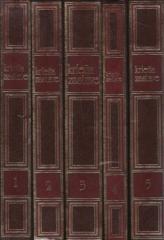
Zastave 1-5
Flags follows the turbulent period of Croatian history from 1912 to 1922 through the family showdown between the father and son of the Emerics, but the family story is only a basis for problematizing the Croatian, Serbian, Macedonian, and Albanian nationa
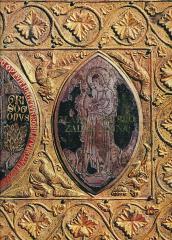
Zlato i srebro Zadra i Nina
A critical essay and exhibition preface in which Miroslav Krleža celebrates Croatian cultural heritage, identity, and centuries-long resistance to foreign influences through the history of sacred gold and silver from Zadar and Nin.