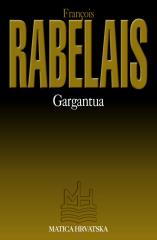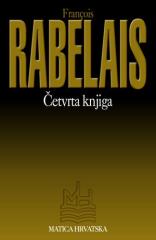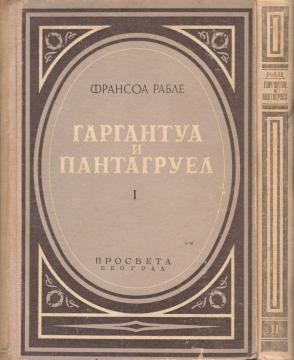
Gargantua i Pantagruel
Rabelais' masterpiece, a five-book novel cycle that follows the adventures of the giant Gargantua and his son Pantagruel. Vinaver, known for his linguistic virtuosity, masterfully conveys Rabelais's lavish humor, juicy swear words, and layered wordplay.
The work represents a cycle of five books that combine satire, grotesque and humanist ideas. Written in the spirit of Renaissance optimism, the books follow the adventures of the giant Gargantua and his son Pantagruel, intertwining humor, philosophy and criticism of social norms. Rabelais parodies medieval scholasticism, church dogmatism and feudal structures, using lush language, obscenities and language games to celebrate life and freedom of thought.
In the first book, Pantagruel (1532), we meet Pantagruel, a giant born in miraculous circumstances, whose education and companionship with Panurge, a cunning friend, lead to comic and philosophical debates. Gargantua (1534) depicts the life of Pantagruel's father, mocking a meticulous education and promoting the humanist ideal of a balanced mind and body. The third book (1546) focuses on Panurge's marriage dilemma, exploring the themes of freedom and fate through witty dialogue. The Fourth (1552) and Fifth Books (1564, partly attributed to Rabelais) follow Pantagruel and Panurge's journey to the oracle of the Holy Bottle, parodying epic travel and religious fanaticism. Rabelais's "Pantagruelism" celebrates the joy of life, while criticizing hypocrisy and stupidity.
Vinaver’s translation is a masterpiece of Serbian literature. As a poet and translator, Vinaver masterfully conveys Rabelais’s linguistic multi-layeredness, preserving his humor, vulgar witticisms, and philosophical nuances. His coinages, such as “vasionska vitlarija” or “Šupeljko,” add a local touch, adapting the text to the reader. In his preface, Eli Finci emphasizes Vinaver’s ability to capture the “buzz of words” and the vitality of the original.
Although some have criticized Vinaver for allegedly overdoing it with vulgarity, analysis shows that he faithfully captures Rabelais’s ambivalent use of language, where swear words serve as satirical weapons. This translation, although five decades old, remains lively and relevant, making Rabelais’s work accessible and attractive to modern readers, while preserving the Renaissance spirit and criticism of society.
The book consists of two volumes.
Jedan višetomni primjerak je u ponudi.
- The cover is missing
- The cover is missing