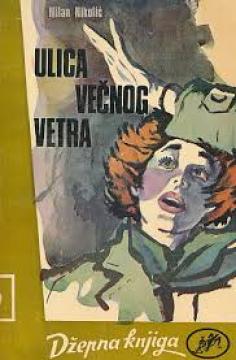
Ulica večnog vetra
"Street of Eternal Wind" (1965) is one of the most interesting novels by Croatian writer Milan Nikolić (1924–1970), known as the "Simenon of Virovitica" and a pioneer of the Yugoslav crime genre of the post-war period.
The novel takes place in Belgrade (which is unusual for Nikolić, who often wrote about Croatian or Yugoslav motifs), where an unknown serial killer systematically kills redheaded women. The victims are linked by this physical trait, which indicates a deep psychopathology and a sick obsession of the perpetrator. The story follows an investigation (probably by the police or a private detective), full of tension, false leads, unexpected twists and dark secrets from the past.
Nikolić combines here a classic crime plot with elements of horror and psychological thriller: the atmosphere is gloomy, the streets of Belgrade "forever windy" symbolize restlessness, transience and the elusiveness of evil. The motif of redheaded women adds an almost fetishistic, sick layer, which makes the novel darker than his pure detective works such as "The Rooster in the Window" or "The Four Dead Sheriffs".
The style is dynamic, fast-paced, with influences from Simenon (psychological depth) and Spillane (action and cynicism), but with a Balkan flair and retro charm of the 1960s. Critics point out the complex mechanism of motivation and the mixture of genres, which makes it one of Nikolić's most appreciated titles among fans of domestic crime fiction. One of the key works of the Yugoslav noir/crime period, with an emphasis on the psychopathology of evil and urban unrest.
One copy is available