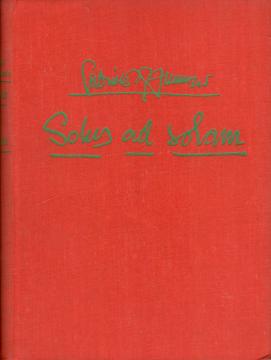
Solus ad solam
Solus ad solam (1910/1911) is an intimate, lyrical prose in which the author passionately and erotically describes his love for a woman, mixing ecstasy of body and spirit, poetic exaltation, and decadent sensuality.
The work belongs to D’Annunzio’s intimate, autobiographical cycle and is considered one of the most intense expressions of his love lyrics in prose. It was written during a passionate relationship with an unknown woman (in literature she is often associated with Giuseppina Mancini or a similar mistress). The book is written in the form of a diary and love letters addressed to “her”, in which the author celebrates love as a religion, the body as a temple and passion as a divine force.
Solus ad solam (“Alone to her”) is the pinnacle of D’Annunzio’s decadent and supermasculine poetics: a combination of high lyricism, erotic ecstasy, mysticism and narcissism. The language is rich, sumptuous, full of metaphors, archaic expressions and sensual images. The work exudes aesthetic hedonism, the cult of beauty and typical D’Annunzio exaggeration.
In the Croatian reception of 1940, the book was noted as an example of the highest European decadent prose, but at the same time it caused controversy due to its open eroticism and moral freedom. For some it was a masterpiece of poetic prose, for others it was pretentious and exaggerated.
Today, Solus ad solam is considered one of the most characteristic works of D’Annunzio from his mature period and an important document of Italian decadentism and aestheticism at the beginning of the 20th century. The antiquarian edition from the Velzek publishing house from 1940 is rare.
One copy is available