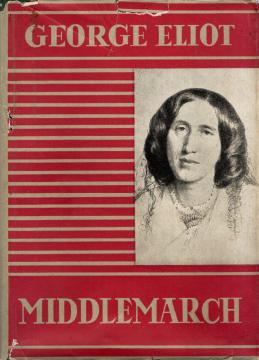
Middlemarch I: Gospođica Brooke
In the first book of the novel, we meet Dorothea Brooke, a 19-year-old girl who wants a great life dedicated to good. She marries the old scholar Casaubon, thinking that he will help her in her intellectual work, but the marriage brings disappointment.
Middlemarch George Eliot (pseudonym of Mary Ann Evans) begins with Prelude and Book I: Miss Brooke, which were originally separate stories before being combined into a larger novel. The Prelude compares Dorothea to unrealized female ideals such as St. Teresa of Avila—a woman of spiritual greatness but limited by circumstances in provincial England 1829–1832 (before the Reform Act of 1832).
The main character Dorothea Brooke, a 19-year-old orphan, lives with her younger sister Celia at her uncle Mr. Brooke's Tipton Grange. Dorothea is intelligent, religious, and ascetic—she wears simple clothes, rejects luxury, and dreams of great deeds for the betterment of the world. She idealizes knowledge and spirituality, and despises trivialities. Celia is her opposite—practical, conventional, "common sense."
Uncle Brooke, an indecisive liberal, brings guests: Sir James Chettam, a young, wealthy baron who woos Dorothea (she rejects him because she finds him too "plain"), and Reverend Edward Casaubon, a 45-year-old scholar working on The Key to All Mythologies. Dorothea sees in him an intellectual giant – a father figure who will introduce her to deep knowledge and give her purpose. He ignores warnings (Celia, Mrs. Cadwallader, uncle) that Casaubon is dry, old, passionless. She marries him, hoping that he will help him in his work and live a "big life".
Casaubon is actually meticulous, insecure, afraid that Dorothea is too young and attractive for him. He introduces her to Lowick Manor, where she meets his cousin Will Ladislaw (young, artistic, liberal) – which leads to the first tensions. Dorothea realizes that Casaubon is not the genius she imagined him to be—his work is sterile, and he does not allow her to realize herself.
Book I introduces key themes: idealism versus reality, the limitations of women in Victorian society, marriage as a trap for ambitious souls, provincial life full of hypocrisy and petty ambition. Eliot writes realistically, with irony and deep psychological analysis—Dorothea is sympathetic, but also blinded by self-deception. This is the introduction to a larger novel that will expand to include Lydgate, the Vincys, Bulstrode, and political change.
One copy is available
- Nedostaje omot
- Pohabane korice