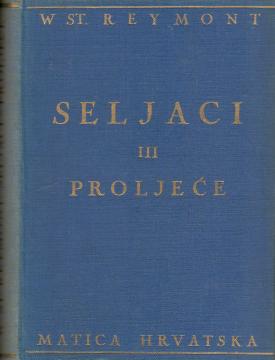
Seljaci III: Proljeće
The third part of the epic tetralogy The Peasants. Spring brings the awakening of nature, but also new conflicts in the village of Lipce: the culmination of a love triangle, family drama and social tensions. The continuation of Nobel's epic of Polish peas
The third volume of the great tetralogy Peasants (Chłopi), for which Reymont received the Nobel Prize for Literature in 1924. The translation from Polish, as with the previous parts, was made by Julije Benešić.
The plot of Spring takes place in the village of Lipce when nature awakens after a long winter. The snow melts, the fields are prepared for sowing, and the village slowly emerges from its winter dormancy. However, the awakening of nature is accompanied by the awakening of old conflicts. The love triangle between Maciej Boryna, his son Antko, and the beautiful Jagna reaches its peak. The passionate relationship between Antko and Jagna can no longer be hidden, which leads to difficult family dramas, gossip, and the growing resistance of the entire village towards Jagna.
In this part, Reymont even more strongly depicts the social tensions in the village: the struggle for land, conflicts between generations, the attitude of the peasants towards the landlords, and the role of women in a patriarchal society. Hanka, Antek's wife, undergoes a powerful transformation – from an oppressed woman she transforms into a determined mother and mistress fighting for the future of her children.
Spring is more dynamic and dramatic than the previous parts. Nature here symbolizes renewal and hope, but at the same time emphasizes the cyclicality of life in which passions, greed and conflicts are constantly repeated. Reymont masterfully combines epic descriptions of spring work, the awakening of the earth and natural forces with intimate human tragedies.
Benešić's translation retains all the power and richness of the original – the peasant language, the rhythm of nature and the collective strength of the village as the main character. The novel shows the peak of Reymont's naturalism and realism, but also a deep poetic dimension.
Spring prepares the culmination of the entire tetralogy that follows in Summer. The tetralogy Peasants is considered one of the most impressive epic depictions of peasant life in world literature – a universal image of man, community and nature.
Eine Kopie ist als Teil des Buchsets "Seljaci I-IV" verfügbar.
Durchsuchen Sie die Büchersammlung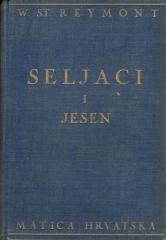
1. Seljaci I: Jesen
Prvi deo epske tetralogije o životu poljske seoske zajednice u selu Lipce. Roman prikazuje ritam seoskih radova, svakodnevicu, intrige, sukobe oko zemlje i vlasti, i ženidbu starog, bogatog seljaka Maćeja Borine sa mladom i lepom Jagnom.
- Napukla leđa
2. Seljaci II: Zima
Drugi deo epske tetralogije Seljaci. Roman prikazuje težak zimski život u selu Lipce, produbljuje sukobe unutar Borinine porodice, strastveni odnos između Antka i Jagne i rastuće tenzije u selu. Ep o seljačkom životu dobitnik Nobelove nagrade.
3. Seljaci III: Proljeće
Treći deo epske tetralogije Seljaci. Proleće donosi buđenje prirode, ali i nove sukobe u selu Lipce: kulminaciju ljubavnog trougla, porodičnu dramu i društvene tenzije. Nastavak Nobelovog epa o poljskom seljačkom životu.
4. Seljaci IV: Ljeto
„Die Bauern IV: Sommer“ ist der letzte und eindrucksvollste Teil der epischen Tetralogie „Die Bauern“. Er gipfelt im Konflikt im Dorf Lipce während des heißen Sommers und der Erntezeit, im Drama um Jagna, im Tod von Maciej Boryna und im endgültigen Abschl
Angeboten wird ein Exemplar
- Abgenutzte Bezüge