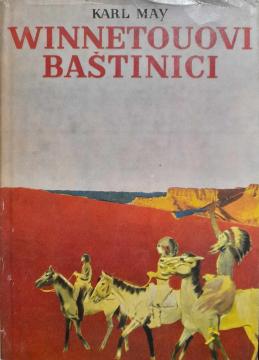
Winnetouovi baštinici

Winnetouovi baštinici

Heirs of Winnetou is the name he uses today for the original Winnetou, abbreviated: Winnetou IV, Karl May's last completed novel. This was also the last volume of "Collected Travel Stories".

Old Shatterhand, now over 60 years old, receives several letters at home in his villa in Radebeul, including from Old Surehand's and Apanatschka's sons. In them he is informed about the upcoming construction of a Winnetou monument and invited to it. In order to take a look at the matter and, if necessary, prevent it, he sets off with his second wife Klara, “Herzle”.

On their journey through the hardly “wild” West (the “heart” is allowed to sleep in a tent they brought with them) they are accompanied by a good friend and former Westman Max “Maksch” Pappermann. On the way they meet the “Young Eagle” and Santer's two sons, who visited him in Germany at the beginning of the novel. In the process, Old Shatterhand finds Winnetou's actual will by digging deeper into the hole he already dug in Winnetou III and where he found the "treasure map" that was ultimately destroyed by Santer. Old Shatterhand finally manages to convince Winnetou's followers of the superficiality and dishonesty of the monument, which fails to complete. In the afterword, however, a monument in New York City is announced "as a symbol of the fact that the people of America, despite all the injustices inflicted on the red race, fully appreciate the noble qualities of the native Americans."

Furthermore, Old Shatterhand reconciles with many of his old enemies (e.g. Tatellah Satah). All in all, the novel is much more romanticized than its predecessors. The motif “peace and reconciliation” is in the foreground. There is talk of a “Clan Winnetou”, whose members wear the name of someone they protect under a twelve-pointed yellow star on their chest. In the origin story of this clan there is also mention of Marah Durimeh, an old, Catholic and rather mysterious queen who actually only appears in the Orient stories by Karl May. She is known to Native Americans as Queen Marimeh. Their knowledge is traced back to the former land bridge between Asia and North America, over which messengers from the kingdom of Jinnistan came thousands of years ago.

Translation
Vlatko Šarić
Graphics design
Josip Vaništa
Dimensions
20 x 14 cm
Pages
405
Publisher
Mladost, Zagreb, 1965.
 
Latin alphabet. Hardcover with dust jacket.
Language: Croatian.

Two copies are available

Copy number 1

Condition:Used, very good condition
Damages or inconvenience notice:
  • Slight damage to the dust jacket

Copy number 2

Condition:Used, very good condition
Damages or inconvenience notice:
  • The cover is missing
 

Are you interested in another book? You can search the offer using our search engine or browse books by category.

You may also be interested in these titles

Proces

Proces

Franz Kafka

Kafka wrote The Process between 1914 and 1915, published posthumously in 1925. The novel is unfinished but with an added final chapter by Max Brod. Edition with a foreword by B. Živojinović and an afterword by Walter Killi.

BIGZ, 1990.
Serbian. Latin alphabet. Paperback.
4.26
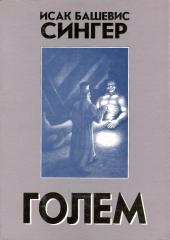
Golem

Golem

Isaac Bashevis Singer

„Golem“ ist ein Roman des Nobelpreisträgers Isaac Bashevis Singer, der die traditionelle Geschichte des Golems aus der jüdischen Folklore präsentiert. Das Werk erschien erstmals 1969 auf Jiddisch, der Autor selbst übersetzte den Roman 1982 ins Englische.

Narodna knjiga, 1995.
Serbian. Cyrillic alphabet. Paperback.
3.52
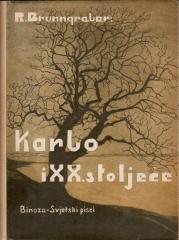
Karlo i XX. stoljeće

Karlo i XX. stoljeće

Rudolf Brunngraber

The story of Karl Lakner, caught in the huge world machine of capitalism. A political and economic visionary novel by Rudolf Brunngraber from the 1930s.

Naklada Binoza, 1939.
Croatian. Latin alphabet. Hardcover with dust jacket.
9.56 - 37.42
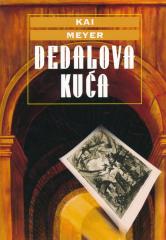
Dedalova kuća

Dedalova kuća

Kai Meyer

Uzbudljiva priča namenjena ljubiteljima krimi romana sa temama iz istorije umetnosti.

Mozaik knjiga, 2000.
Croatian. Latin alphabet. Paperback.
5.42
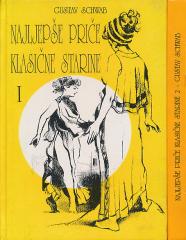
Najljepše priče klasične starine 1-2

Najljepše priče klasične starine 1-2

Gustav Schwab

Schwabovo djelo obnavlja i razvija osjećaj za vrijednost starine, taj nepresušni izvor narodne fantazije koja nastoji protumačiti i objasniti svijet izvornom pjesničkom snagom.

CID-NOVA, 1995.
Croatian. Latin alphabet. Hardcover.
The book consists of two volumes
19.42
Josip i njegova braća II: Mladi Josip

Josip i njegova braća II: Mladi Josip

Thomas Mann

Drugi deo tetralogije nemačkog dobitnika Nobelove nagrade Tomasa Mana, „Jozef i njegova braća“, nosi naslov „Mladi Josif“. Ova tetralogija se smatra jednim od najvažnijih dela Tomasa Mana, kao i nemačke književnosti dvadesetog veka.

Fraktura, 2009.
Croatian. Latin alphabet. Hardcover with dust jacket.
27.34