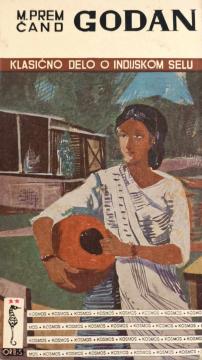
Godan
In the small village of Belari, where the fields stretch like weary dreams, lived Hori, a man whose heart was deeply rooted in the land he tilled. He was a poor farmer, pious and faithful, with a wife, Dhania, who was the fire of his home—brave, eloquent, and just. They had three children: a son, Gobar, full of rebellious spirit, and two daughters, Rupa and Sona, who flourished in the shadow of suffering.
Hori’s dream was simple but sacred: a cow. Not just for milk and a plow, but for godaan—the ritual gift of a cow to a Brahmin, an act that would secure him a place in heaven. After years of starvation and debt, Hori finally bought a cow on credit from his neighbor Bhola. But fate, cruel as the monsoon, struck: Hori’s brother Heera, jealous and bitter, poisoned the animal. Heera's escape brought the police to Hori's door, and debts piled up like clouds – to loan sharks, landlords and customs.
Dhania stood by him, fighting with her tongue and hands against injustice. "We are the bones of this land!" she shouted at village meetings. Gobar, tired of the peasant yoke, fled to the city of Lucknow with Jhunia, the daughter of Bhola. Love united them, but the city separated them: Gobar became an entrepreneur in a factory, but, in a moment of weakness, he left Jhunia with his parents. Hori and Dhania, with hearts as wide as a river, accepted her as their daughter-in-law, violating the rules of caste and customs. The peasant panochayat punished them - they took away their oxen, leaving them without plowing.
But, despite all the adversities, Hori did not give up. Despite illness and losses, he remained a symbol of resistance - a man who worked the land with hands bloody with sweat, faithful to dharma. In the end, in agony, he donated his last rupee to a brahmin instead of a cow, whispering prayers. "Life is a gift, and suffering is a lesson," he said to Dhani, who was crying beside him.
Multiple copies are available