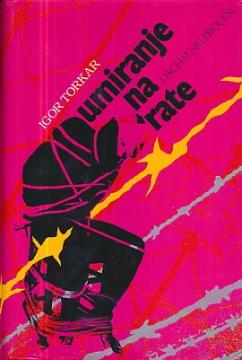
Umiranje na rate: Dachauski procesi

Umiranje na rate: Dachauski procesi

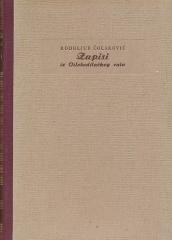
Igor Torkar, Boris Fakin

A novel by Igor Torkar (Boris Fakin) dealing with "Dachau processes". Through a mixture of documentary and fiction, Torkar exposes the taboo subject of the communist regime, basing the story on his own experience as a prisoner in Dachau and Goli otok.

The main character, Martin Pevkar, faces the injustice of trials in which former internees, mostly communists and Spanish fighters, are accused of collaboration because they survived the camps. The novel follows Pevkar's life after liberation, his struggle with trauma, moral dilemmas, and a sense of betrayal by the system he fought for. Through a non-linear narrative and shifting perspectives, Torkar depicts the psychological consequences of repression, the corruption of government, and the loss of humanity. Pevkar struggles with inner demons as he recalls the horrors of the camps, the trials, and social ostracism.

Torkar bases the story on his own experiences as a prisoner in Dachau and Goli Otok. Documentary elements, such as Torkar's testimony, enhance the authenticity, while the satirical tone exposes the absurdities of the regime. The novel is politically courageous, has caused a strong resonance, and is considered a key work on communist repression. It has been translated into Croatian and German, and the third edition (1996) includes additional documents about the trials.

Translation
Mirjana Hećimović
Editor
Ivana Sor
Illustrations
Vlasto Kopač, Stane Kumar, France Mihelič
Graphics design
Bronislav Fajon
Dimensions
20.5 x 14 cm
Pages
428
Publisher
Globus, Zagreb, 1984.
 
Latin alphabet. Hardcover with dust jacket.
Language: Croatian.

Two copies are available

Copy number 1

Condition:Used, excellent condition

Copy number 2

Condition:Used, very good condition
Damages or inconvenience notice:
  • Traces of patina
  • The cover is missing
Discounted price: 9.626.73
30% discount is valid until 8/6/26 11:59 pm
 

Are you interested in another book? You can search the offer using our search engine or browse books by category.

You may also be interested in these titles

Snažan eho brionski: Odjeci Brionskog plenuma u Bosni i Hercegovini 1966. godine

Snažan eho brionski: Odjeci Brionskog plenuma u Bosni i Hercegovini 1966. godine

Amir Duranović

Amir Duranović's book reconstructs in detail the dramatic year 1966 and the Fourth (Brion) Session of the Central Committee of the Communist Party of Yugoslavia (July 1–2, 1966), at which Aleksandar Ranković, the long-time head of the UDB and vice preside

Udruženje za modernu historiju (UMHIS), 2017.
Croatian. Latin alphabet. Paperback.
9.54
Lov na zločince: Kako su nacistički ratni zločinci pobjegli i potraga da ih se privede pravdi

Lov na zločince: Kako su nacistički ratni zločinci pobjegli i potraga da ih se privede pravdi

Guy Walters

The book analyzes the escape of Nazi war criminals after 1945 and the long and uneven attempt to find and prosecute them, while debunking myths about the organized escape.

Naklada Ljevak, 2009.
Croatian. Latin alphabet. Hardcover.
12.429.32
O nacionalnoj istoriji kao vaspitnom predmetu

O nacionalnoj istoriji kao vaspitnom predmetu

Milovan Đilas

A programmatic text in which Đilas, as a senior party ideologist, sets out Marxist-Leninist guidelines for the teaching and writing of national (Yugoslav) history as a means of education and ideological struggle.

Pedagoško-književni zbor, 1949.
Serbian. Latin alphabet. Paperback.
14.36
Doživljaji i putovanja do slobode

Doživljaji i putovanja do slobode

Vladimir Novak

The autobiographical work of Croatian communist activist Vladimir Novak, a survivor of the Ustasha camps, follows his memories of resistance to fascism during World War II.

August Cesarec, 1979.
Croatian. Latin alphabet. Hardcover with dust jacket.
8.266.20
Teror narodu: Povijest OZNE, Titove političke policije

Teror narodu: Povijest OZNE, Titove političke policije

William Klinger

In the book, historian William Klinger investigates the origin and operation of OZNA - the brutal repressive apparatus of communist Yugoslavia, which monitored, imprisoned and liquidated political opponents.

Večernji list, 2014.
Croatian. Latin alphabet. Paperback.
7.34
Mein Kampf / Moja borba

Mein Kampf / Moja borba

Adolf Hitler

Hitler's book combines autobiography and political manifesto, laying the foundations of Nazi ideology. The work has been banned in many countries for promoting hatred, but it remains a historical document that reveals the origins of Nazi crimes.

Kvrga izdavaštvo, 1999.
Croatian. Latin alphabet. Hardcover.
27.00