Miroslav Krleža
Miroslav Krleža (July 7, 1893 – December 29, 1981) was one of the most important Croatian writers of the 20th century – a poet, novelist, playwright, essayist and encyclopedist. He was born in Zagreb, educated at the Austro-Hungarian Military Academy, but quickly devoted himself to literature and intellectual activity. He was a strong critic of social injustice, petty bourgeoisie and political opportunism, which characterized much of his literature.
His work covers a wide range of genres. The most notable are the novel series about the Glembays (Gospoda Glembayev, U agoniji, Leda), and the epic novel The Return of Filip Latinovicz (1932). He also wrote essays, diaries, criticism, encyclopedic articles and poems such as those from the collection Pan.
Krleža's style is characterized by a rich vocabulary, complex sentences, intellectual depth and ironic distancing. He was a key figure in Croatian culture and one of the founders of the Lexicographic Institute (today LZ Miroslav Krleža). Despite political pressures, he remained faithful to intellectual autonomy.
Krleža's legacy is indispensable in the Croatian canon and indispensable in understanding modernity and the historical destiny of Croatia and Central Europe.
Naslovi u ponudi
Dnevnik 2: Dnevnik 1918-22 (Davni dani II)
Das Tagebuch 1918–22 dokumentiert Krležas Schriften aus den Nachkriegsjahren, die vom Zusammenbruch der Monarchie, der Entstehung eines neuen Staates, politischen Spaltungen und seiner zunehmend harschen Kritik an Gesellschaft, Intellektuellen und ideolog
Hrvatski bog Mars
Der kroatische Gott Mars bringt sieben Antikriegsromane hervor, in denen Krleža den Krieg als eine grausame, sinnlose Maschinerie darstellt, die den „kleinen Mann“ zerstört, und die Heuchelei des Militarismus und der Mythen über Heldentum entlarvt.
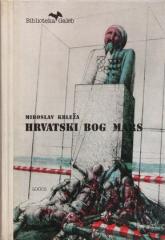
Hrvatski bog Mars
Krležas bekannteste Kurzgeschichtensammlung „Der kroatische Gott Mars“ ist Teil eines imaginären Zyklus literarischer Werke zum Thema des Ersten Weltkriegs und der kroatischen Heimwehr.
Hrvatski bog Mars
Die Kurzgeschichtensammlung „Kroatischer Gott Mars“ von Miroslav Krleža ist eines der bedeutendsten Antikriegswerke der kroatischen Literatur. Es wurde erstmals 1922, dann 1933 herausgegeben und nahm 1947 seine endgültige Form an.
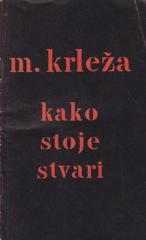
Kako stoje stvari: Predavanje održano u Domu JNA u Zagrebu 17. 12. 1952.
U svom predavanju „Kako stvari stoje“ (1952), Krleža razmatra političku i kulturnu situaciju posleratne Jugoslavije, ističući potrebu za kritičkom misli, kulturnom obnovom i otporom dogmatizmu.

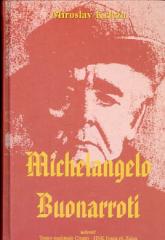
Michelangelo Buonarotti
Ovo je prvi prijevod na talijanski jezik kojim se Buonarroti predstavlja čitateljima talijanskog jezika.

Na rubu pameti
The novel "On the Edge of Reason" (1938) is Krleža's only novel in the first person. A doctor of law morally condemns a powerful industrialist at a banquet, thereby provoking a general social boycott, persecution, and his own downfall.
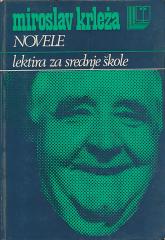
Novele
Krleža's novels often explore deep human emotions and complex characters, and his prose is known for its rich language and deep analysis of society and history.