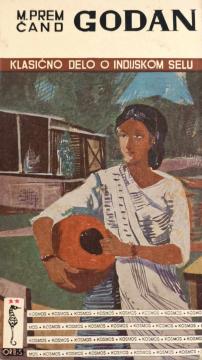
Godan

Godan

Munshi Prem Chand

In dem kleinen Dorf Belari, wo sich die Felder wie müde Träume erstrecken, lebte Hori, ein Mann, dessen Herz tief mit dem Land verwurzelt war, das er bestellte. Er war ein armer Bauer, fromm und gläubig, mit seiner Frau Dhania, die das Feuer seines Hauses war – mutig, redegewandt und gerecht. Sie hatten drei Kinder: einen Sohn, Gobar, voller rebellischem Geist, und zwei Töchter, Rupa und Sona, die im Schatten des Leidens aufblühten.

Horis Traum war einfach, aber heilig: eine Kuh. Nicht nur für Milch und einen Pflug, sondern für Godaan – das rituelle Geschenk einer Kuh an einen Brahmanen, eine Tat, die ihm einen Platz im Himmel sichern sollte. Nach Jahren des Hungers und der Schulden kaufte Hori schließlich eine Kuh auf Kredit von seinem Nachbarn Bhola. Doch das Schicksal schlug zu, grausam wie der Monsun: Horis Bruder Heera, eifersüchtig und verbittert, vergiftete das Tier. Heeras Flucht brachte die Polizei vor Horis Tür und die Schulden türmten sich wie Wolken – bei Kredithaien, Grundbesitzern und dem Zoll.

Dhania stand ihm bei und kämpfte mit Zunge und Händen gegen die Ungerechtigkeit. „Wir sind das Rückgrat dieses Landes!“, rief sie bei Dorfversammlungen. Gobar, des bäuerlichen Jochs müde, floh mit Jhunia, der Tochter Bholas, nach Lucknow. Die Liebe verband sie, doch die Stadt trennte sie: Gobar wurde Unternehmer in einer Fabrik, doch in einem Moment der Schwäche ließ er Jhunia bei seinen Eltern zurück. Hori und Dhania, mit Herzen so weit wie ein Fluss, nahmen sie als ihre Schwiegertochter an und verletzten damit Kastenregeln und Sitten. Der Bauernpanochayat bestrafte sie – man nahm ihnen ihre Ochsen weg und ließ sie ohne Pflügen zurück.

Doch trotz aller Widrigkeiten gab Hori nicht auf. Trotz Krankheit und Verlusten blieb er ein Symbol des Widerstands – ein Mann, der mit schweißnassen Händen das Land bearbeitete, treu dem Dharma. Am Ende spendete er in seiner Qual seine letzte Rupie einem Brahmanen statt einer Kuh und flüsterte dabei Gebete. „Das Leben ist ein Geschenk und Leiden eine Lektion“, sagte er zu Dhani, der neben ihm weinte.

Naslov originala
Dar krave
Prevod
Zora Minderović
Urednik
Čedomir Minderović
Dimenzije
19 x 10,5 cm
Broj strana
2601
Izdavač
Kosmos, Beograd, 1960.
 
Latinica. Broširano.
Jezik: Srpski.

Više primeraka je u ponudi

Primerak broj 1

Stanje:Korišćeno, u odličnom stanju
Dodato u korpu!

Primerak broj 2

Stanje:Korišćeno, u odličnom stanju
Dodato u korpu!

Primerak broj 3

Stanje:Korišćeno, u odličnom stanju
Dodato u korpu!
 

Zanima Vas i neka druga knjiga? Možete pretražiti našu ponudu pomoću pretrage ili prelistati knjige po kategorijama.

Možda će Vas zanimati i ovi naslovi

Vrtlar

Vrtlar

Rabindranath Tagore

The Gardener (1913), one of Tagore's most famous poetic works, is a collection of love and mystical lyrics translated by Iso Velikanović. A poetic breviary about love, longing, nature, and spiritual union.

St. Kugli, 1923.
Hrvatski. Latinica. Broširano.
8,62
Otkriće Indije

Otkriće Indije

Jawaharlal Nehru

The Discovery of India, written in 1946 during Nehru's time in prison, is a monumental work that explores the history, culture, and spirit of India. Nehru, a key figure in the Indian independence movement, writes about the past and with a vision for the n

Rad, 1952.
Srpski. Latinica. Tvrde korice s omotom.
9,467,10
Pančatantra

Pančatantra

The Panchatantra was conceived as a kind of manual for rulers, in which popular wisdom is combined with philosophy, psychology and politics, and all of this is presented in a simple and elegant style of superior literature.

LOM, 2008.
Srpski. Ćirilica. Broširano.
9,76
Pančatantra: u najstarijoj sačuvanoj recenziji Tantrakhjajika

Pančatantra: u najstarijoj sačuvanoj recenziji Tantrakhjajika

The Panchatantra is a work of classical Sanskrit literature written between the 3rd and 5th centuries CE. According to preserved manuscripts and numerous adaptations, the work later took the form of a popular folk book.

Naprijed, 1999.
Hrvatski. Latinica. Tvrde korice.
22,76
Žena koja je slikala kanom

Žena koja je slikala kanom

Alka Joshi

"The Woman Who Painted with Henna" is the debut novel of Indian-American author Alka Joshi, the first part of the Jaipur trilogy. The novel has been praised for its authentic portrayal of Rajasthani culture and the universal theme of female emancipation.

Mozaik knjiga, 2021.
Hrvatski. Latinica. Broširano.
13,22
Arktička pradomovina Veda

Arktička pradomovina Veda

Bal Gandahar Tilak

The book The Arctic Homeland of the Vedas (1903) by the Indian scholar Tilak proposed the hypothesis that the ancient Aryans, the authors of the Rigveda, originated in the Arctic region. Although controversial, the book remains important in the study of V

NIRO Književne novine, 1987.
Srpski. Latinica. Broširano.
17,56