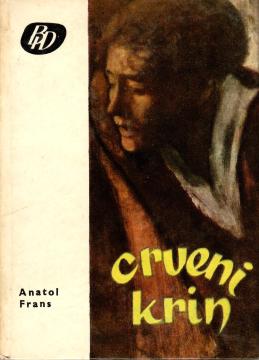
Crveni krin

Crveni krin

Anatole France

The Red Lily (1894) is not just a story of forbidden passion – it is a subtle, ironic fresco of a world in which love, politics, and art intertwine in a thin, almost transparent web of conventions and desires.

The novel follows Therese Martin-Bellème, a young, beautiful and dissatisfied countess, married to an older, cold politician – a marriage of convenience that has left a deep void in her life. Into her world enters Jacques Dechartre, a passionate sculptor and artist, a man who is the living opposite of her husband: warm, intuitive, full of sensuality and poetic depth. What begins as a discreet affair quickly develops into an obsessive, almost obsessive love – a love that is both liberating and destructive.

The key part of the plot takes place in Florence, the city of the red lily (a symbol of Florence and Tuscany, but also of passion, blood, beauty and transience). There, under the Tuscan sun and in the shadow of Renaissance masterpieces, the lovers try to capture a moment of eternity – but reality inexorably brings them back: jealousy, social norms, fear of scandal and the internal contradictions of Therese herself, who struggles between the desire for freedom and the fear of losing her position.

France writes with a distinctive elegance and gentle irony – there is no pathos, no melodrama. Instead, there is a fine observation of human nature: how love feeds on illusions, how society stifles passion, how art can be a refuge and at the same time a lie. The novel is full of philosophical digressions, conversations about art, politics and love, with France's typical skeptical but compassionate view of the world.

It is one of his most intimate and erotic works, far from the satires of The Thirst of the Gods or Penguin Island – here the focus is on the female soul, on sensuality and on the fragility of happiness. Critics have praised it as a "romance novel for intellectuals", and today it is read as a subtle critique of bourgeois society at the end of the 19th century.

Naslov originala
Le Lys rouge
Prevod
Radivoje Karadžić
Urednik
Milica Grabovac
Dimenzije
17 x 12 cm
Broj strana
241
Izdavač
Svjetlost, Sarajevo, 1961.
 
Latinica. Tvrde korice.
Jezik: Srpski.

Dva primerka su u ponudi

Primerak broj 1

Stanje:Nekorišćeno
Dodato u korpu!

Primerak broj 2

Stanje:Korišćeno, u vrlo dobrom stanju
Oštećenja / nepogodnosti:
  • Slight damage to the cover
Dodato u korpu!
 

Zanima Vas i neka druga knjiga? Možete pretražiti našu ponudu pomoću pretrage ili prelistati knjige po kategorijama.

Možda će Vas zanimati i ovi naslovi

Mali Pierre

Mali Pierre

Anatole France

Roman Anatola Fransa *Mali Pjer* (1918) je autobiografsko delo u kojem autor, uz blagu ironiju i sećanja, oživljava idilične i poučne trenutke svog detinjstva u Parizu.

Matica hrvatska, 1946.
Hrvatski. Latinica. Tvrde korice.
6,24
Taida: roman iz aleksandrijskih vremena

Taida: roman iz aleksandrijskih vremena

Anatole France

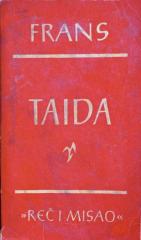
Roman Taida, objavljen 1890. godine, jedno je od najpoznatijih dela francuskog nobelovca Anatola Fransa. Delo je inspirisano legendom o Svetoj Taidi Egipatskoj, kurtizani iz 4. veka koja je prešla na hrišćanstvo.

Rad, 1961.
Srpski. Latinica. Broširano.
1,99
Ostrvo pingvina

Ostrvo pingvina

Anatole France
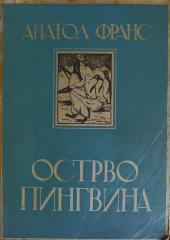
Kultura, 1946.
Srpski. Ćirilica. Broširano.
3,99
Kiše

Kiše

Saint-John Perse

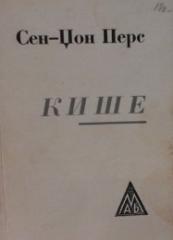
Zbirka Perseove poezije, uz dodatak govora koji je pjesnik održao priliko dobivanja Novelove nagrade za književnost 1960. godine.

Bagdala, 1962.
Srpski. Ćirilica. Broširano.
4,28
Kleopatra: Egipatska kraljica

Kleopatra: Egipatska kraljica

Claude Ferval

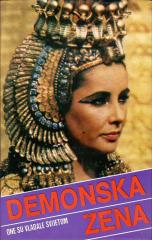
Der Roman erzählt die prunkvolle Geschichte der letzten ägyptischen Königin, einer Frau von außergewöhnlicher Intelligenz und Schönheit, deren Leben, Liebesaffären mit Cäsar und Antonius sowie ihr tragischer Tod das Aufeinandertreffen von Macht, Leidensch

Alfa, 1985.
Hrvatski. Latinica. Tvrde korice s omotom.
8,34
Colomba

Colomba

Prosper Mérimée

Prosper Mérimée's novella, published in 1840, is set in Corsica and explores themes of revenge, honor, and the conflict between the traditional and modern worlds. The novella culminates in a tragic conflict, where love, duty, and violence intertwine.

Zora, 1950.
Hrvatski. Latinica. Broširano.
2,44 - 2,48