Miroslav Krleža
Miroslav Krleža (July 7, 1893 – December 29, 1981) was one of the most important Croatian writers of the 20th century – a poet, novelist, playwright, essayist and encyclopedist. He was born in Zagreb, educated at the Austro-Hungarian Military Academy, but quickly devoted himself to literature and intellectual activity. He was a strong critic of social injustice, petty bourgeoisie and political opportunism, which characterized much of his literature.
His work covers a wide range of genres. The most notable are the novel series about the Glembays (Gospoda Glembayev, U agoniji, Leda), and the epic novel The Return of Filip Latinovicz (1932). He also wrote essays, diaries, criticism, encyclopedic articles and poems such as those from the collection Pan.
Krleža's style is characterized by a rich vocabulary, complex sentences, intellectual depth and ironic distancing. He was a key figure in Croatian culture and one of the founders of the Lexicographic Institute (today LZ Miroslav Krleža). Despite political pressures, he remained faithful to intellectual autonomy.
Krleža's legacy is indispensable in the Croatian canon and indispensable in understanding modernity and the historical destiny of Croatia and Central Europe.
Titles in our offer
Dnevnik 2: Dnevnik 1918-22 (Davni dani II)
The Diary 1918–22 records Krleža's writings from the post-war years marked by the collapse of the Monarchy, the emergence of a new state, political fractures, and his increasingly harsh criticism of society, intellectuals, and ideological illusions.
Hrvatski bog Mars
The Croatian god Mars brings seven anti-war novels in which Krleža portrays war as a cruel, senseless machinery that destroys the "little man", exposing the hypocrisy of militarism and myths about heroism.
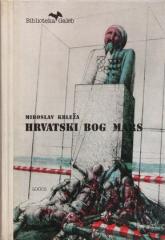
Hrvatski bog Mars
Krleža's best-known collection of short stories, The Croatian God Mars, is part of an imagined cycle of literary works with the theme of the First World War and Croatian Home Guards.
Hrvatski bog Mars
The short story collection Croatian god Mars by Miroslav Krleža is one of the most important anti-war works of Croatian literature. It was first issued in 1922, then in 1933, and took its final form in 1947.
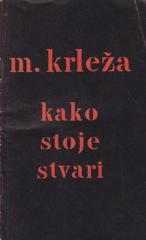
Kako stoje stvari: Predavanje održano u Domu JNA u Zagrebu 17. 12. 1952.
In his lecture How Things Are (1952), Krleža discusses the political and cultural situation of post-war Yugoslavia, emphasizing the need for critical thought, cultural renewal, and resistance to dogmatism.
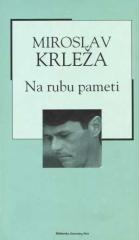
Na rubu pameti
The novel "On the Edge of Reason" (1938) is Krleža's only novel in the first person. A doctor of law morally condemns a powerful industrialist at a banquet, thereby provoking a general social boycott, persecution, and his own downfall.
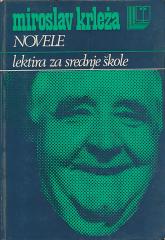
Novele
Krleža's novels often explore deep human emotions and complex characters, and his prose is known for its rich language and deep analysis of society and history.