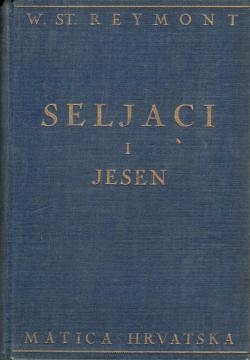
Seljaci I: Jesen
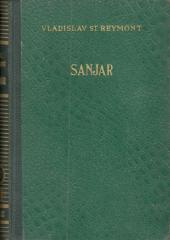
The first part of an epic tetralogy about the life of a Polish rural community in the village of Lipce. The novel depicts the rhythm of rural work, everyday life, intrigues, conflicts over land and power, and the marriage of the old, wealthy peasant Macie
The first volume of the monumental tetralogy Peasants (Chłopi), for which Reymont received the Nobel Prize for Literature in 1924. The translation from Polish was made by Julije Benešić, who also wrote an extensive preface. This edition is considered one of the highest quality Croatian translations of Reymont's work between the two wars.
The action of the first part takes place in the village of Lipce at the end of the 19th century, in autumn. The novel depicts the rhythm of village life through the prism of the harvest, preparations for winter and large peasant festivities. The family of Maciej Boryna, the wealthiest peasant in the village, is at the center of the events. The old Boryna decides to marry the young and beautiful Jagna (Jagusia), which causes fierce conflicts with his own children, especially with his son Antko, who is also in love with Jagna.
Reymont masterfully depicts the entire social microcosm of the village: struggles for land, property and power, intrigue, gossip, love, hatred, drinking, religious rituals and the deep connection of the peasants with nature. The land is the central character here – at the same time mother, wealth and source of all conflicts.
Benešić's translation captures all the power and raw poetry of the original, including the rich peasant language and the rhythm of nature. Julij Benešić's preface is a valuable literary-historical study of Reymont and the place of the Peasants in European literature.
The tetralogy Peasants (Autumn – Winter – Spring – Summer) is one of the greatest masterpieces of European realism and naturalism of the 20th century. The work impresses with its epic breadth, collective portrait of the community and deep understanding of human nature. For many critics, this tetralogy is the most powerful literary depiction of the peasant world in world literature.
The 1928 Matica Hrvatska edition is today a sought-after antiquarian edition, especially appreciated for Benešić's translation and foreword. An indispensable read for lovers of epic prose, realism, and the classics of world literature.
A copy is available as part of the book set "Seljaci I-IV"
Browse the set
1. Seljaci I: Jesen
The first part of an epic tetralogy about the life of a Polish rural community in the village of Lipce. The novel depicts the rhythm of rural work, everyday life, intrigues, conflicts over land and power, and the marriage of the old, wealthy peasant Macie
- Cracked back
2. Seljaci II: Zima
The second part of the epic tetralogy Peasants. The novel depicts the difficult winter life in the village of Lipce, deepens the conflicts within Boryna's family, the passionate relationship between Antko and Jagna, and the growing tensions in the village
3. Seljaci III: Proljeće
The third part of the epic tetralogy The Peasants. Spring brings the awakening of nature, but also new conflicts in the village of Lipce: the culmination of a love triangle, family drama and social tensions. The continuation of Nobel's epic of Polish peas
4. Seljaci IV: Ljeto
Peasants IV: Summer is the final and most powerful part of the epic tetralogy Peasants. The culmination of the conflict in the village of Lipce during the hot summer and harvest, the drama surrounding Jagna, the death of Maciej Boryna and the final closin